February 5, 2026
Introduction:
In the modern food processing and distribution landscape, canned food packaging has evolved far beyond basic preservation to become a manifestation of a company's core competitiveness. As global supply chains respond to environmental policies and terminal user demands shift rapidly, packaging design and material applications are undergoing a profound transformation. For B2B stakeholders, understanding and applying these trends is vital not only for optimizing production costs but also for significantly increasing market share. This article analyzes the application prospects of sustainable packaging, automated functional design, and mushroom production technology to help enterprises excel in a competitive market.
I. Sustainable Packaging: From Compliance to Tech Empowerment
In the context of global green development, sustainable packaging is now the entry threshold for high-end markets. While traditional tinplate and aluminum have high recycling rates, the high energy consumption during their production puts pressure on corporate emission reduction targets. Consequently, developing low-carbon alternative materials is a top priority for packaging innovation.
Mushroom Production Technology represents a major breakthrough in biomaterials, offering a closed-loop environmental solution for the industry. By utilizing the biochemical reaction between mushroom mycelium and agricultural waste, mycelium-based packaging materials offer superior cushioning and thermal insulation. These materials are 100% biodegradable, significantly mitigating soil and marine pollution. For B2B suppliers, integrating these bio-based materials not only meets stringent environmental regulations but also enhances brand status within green supply chains through a technical premium.
II. Convenience and Portability: Refinement in Industrial Design
The accelerating pace of modern life has led consumers to demand extreme convenience in canned food packaging. From an industrial design perspective, "micro-innovations" that reduce opening difficulty and increase portability are key to improving repeat purchase rates. Manufacturers are focusing on self-sealing technologies and lightweight containers to adapt to outdoor, office, and ready-to-eat scenarios.
In B2B mass production, the process optimization of Easy-Open Ends (EOE) and tear-away foil seals is reaching maturity. To further enhance convenience, many companies have introduced single-serving packaging lines to meet the small-dose consumption needs driven by the "Solo Economy." Furthermore, stackable structural designs save storage and logistics space while directly reducing unit transportation costs—a critical indicator of industrial manufacturing prowess.
III. Visual Appeal and Brand Image: Building Barriers through Aesthetics
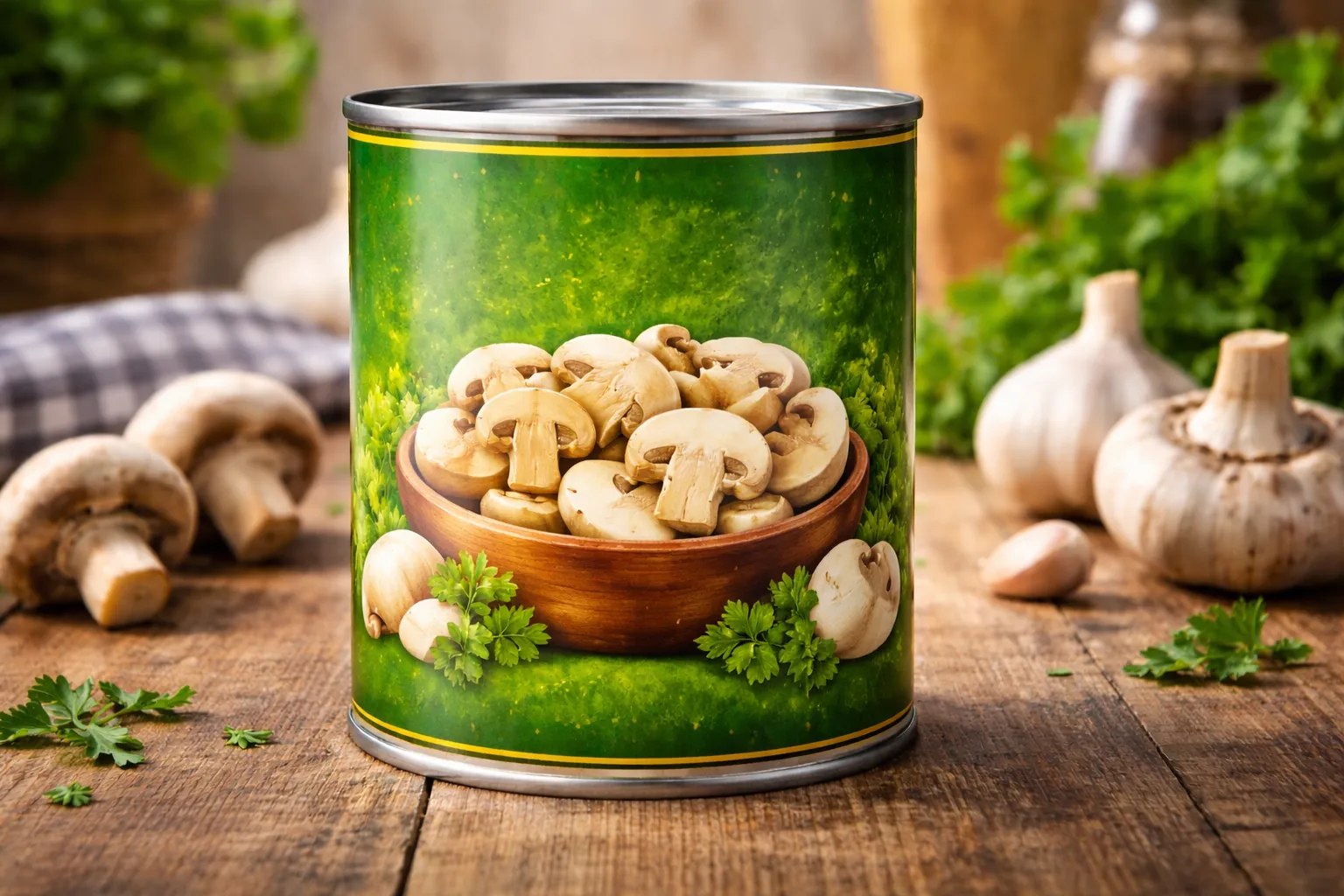
As shelf competition intensifies, the visual expressiveness of canned food packaging directly impacts brand premium capabilities. Professional packaging design no longer pursues a mere stack of colors but achieves deep integration through material texture, typographic aesthetics, and brand philosophy.
Notably, materials developed using Mushroom Production Technology possess a natural, raw texture that aligns perfectly with "organic" and "healthy" product positioning. This visual differentiation strikes a chord with consumers' environmental sentiments, reducing marketing costs. By combining high-precision digital printing, companies can implement complex anti-counterfeiting textures or artistic patterns on the surface, establishing a stable brand recognition system to resist homogenization.
IV. Transparency and Information: Building the Food Safety Trust Chain
Food safety is the absolute bottom line for canned products. Transparency refers not only to the physical form (such as windowed designs) but also to information. Modern consumers demand clarity regarding raw material sources, production dates, nutritional indicators, and sustainability footprints.
By integrating QR codes, RFID, and Blockchain technology, canned food packaging can achieve full traceability from "field to table." Detailed displays of Non-GMO certifications, zero-additive claims, and carbon footprint assessments on labels can significantly enhance consumer trust. This transparency strategy is not only a requirement of international food safety standards but also powerful evidence of a company's compliance and supply chain control in B2B trade.
V. Personalization and Customization: Growth Driven by Flexible Production
The digital age has made "small yet beautiful" customized production a reality. The traditional mass-production model is shifting toward flexibility. Through advanced digital printing equipment, enterprises can provide small-batch customized packaging services for specific holidays, co-branding events, or even individual users.
This personalization trend is particularly prominent in the gift market and high-end customization sectors. For instance, using mycelium molding technology, companies can customize irregular internal linings based on product shape, providing both protection and a sense of "ritual" during the unboxing process. For B2B companies seeking long-term partnerships, having a rapid-response customized R&D platform is a core advantage in demonstrating corporate strength.
Conclusion
The future of the canned food packaging industry lies in the deep coupling of technological innovation and sustainable development. From the material iteration of sustainable packaging to the cutting-edge application of mushroom production technology and transparent design for food safety, every trend signals a reconstruction of industry competition logic. Enterprises must continuously monitor these changes and optimize product structures through packaging innovation. In the future global market, only those who can balance efficiency, environmental protection, and human care will maintain leadership and achieve long-term growth.
Frequently Asked Questions (FAQ)
Q1: Why should canned food companies prioritize sustainable packaging?
A1: Sustainable packaging is not only about corporate social responsibility but also a response to increasingly stringent green trade barriers. Using biodegradable materials effectively reduces carbon tax costs, meets the green supply chain requirements of large B2B clients, and enhances overall brand image.
Q2: What are the specific advantages of Mushroom Production Technology in packaging?
A2: Materials made via mycelium technology are 100% biodegradable, have a low carbon footprint, and offer strong shock resistance. Compared to traditional EPS foam, it is more eco-friendly and allows for complex bio-customized shapes, making it a benchmark for innovation.
Q3: How do canned food packages balance convenience and safety?
A3: By introducing high-precision easy-open designs and composite coating technologies, companies reduce opening force while ensuring food safety and hermetic sealing. Advanced testing equipment ensures that even with lightweight designs, the packaging maintains high pressure resistance.
Q4: Does packaging customization significantly increase production costs?
A4: With the popularization of digital printing and flexible manufacturing, the cost of small-batch customization has dropped significantly. Through modular design and process optimization, companies can achieve packaging innovation while maintaining competitive marginal cost control.
Q5: How can consumers verify food safety information on the packaging?
A5: Modern packaging often integrates traceability codes that consumers can scan to view complete supply chain data. This high level of transparency is an effective way to build brand credibility and is a standard configuration for future industry development.
Q6: What will be the core drivers for canned food packaging over the next five years?
A6: The core drivers will be environmental regulations, technological progress (such as mushroom technology), and the continuous consumer pursuit of personalization and high convenience.
创新博览会LOGO.png)


创新博览会LOGO-white.png)