Suizhou Xianggu Through My Eyes
—— Where do the strengths of Suizhou Xianggu lie? What is its core competitiveness? Where is the path forward?
In my eyes, high-quality Xianggu from Suizhou stands as one of the representatives of top-tier Chinese mushrooms. Its excellence is both visible and tasteable: beautiful cap shapes and patterns, coupled with outstanding aroma and flavor. Articulating clearly where Suizhou Xianggu excels, studying and passing down the craftsmanship behind it, winning broader recognition from buyers, and securing better returns for enterprises and mushroom farmers are the directions worth striving for in the future.
I have been pondering these questions all along.
Ever since I began working in the coordination and management of fresh and dried Xianggu exports in 2003, I have visited many major mushroom-producing regions across China and traveled to quite a few countries. Over the past three years of cooperation with Suizhou, the more I have engaged with it, the more I have felt compelled to earnestly share what I have seen, tasted, and thought.
When people talk about Suizhou Xianggu, exports often come to mind first—this is an achievement accumulated through years of development. Building on this foundation, we should further clarify: What enables Suizhou Xianggu to win the market? Which skills are worth upholding, and in what areas do we need to move forward?
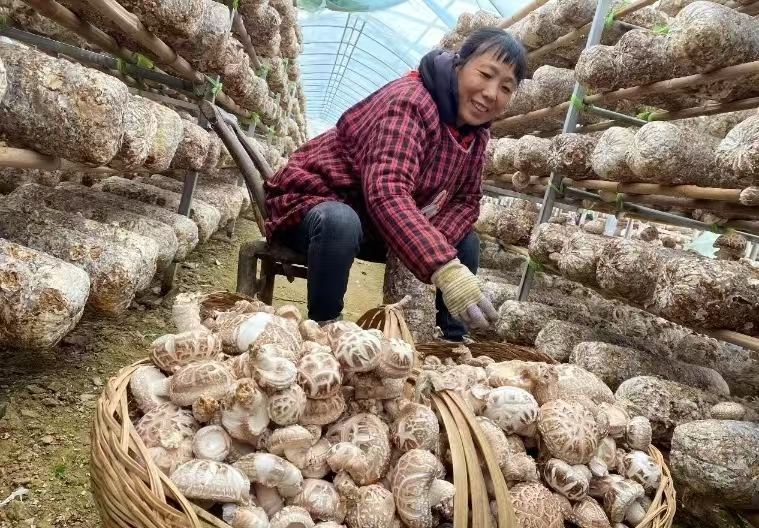
I. Good Xianggu Starts Right From Planting
To understand Suizhou dried Xianggu, one must first grasp a key characteristic: Preparations for making great dried mushrooms begin the moment they are planted.
Choosing the right strains, selecting the right raw materials, managing spawn running and fruiting, timing the harvest, and executing the drying process all revolve around the same objective. Premium fresh mushrooms destined directly for drying depend on both cultivation craftsmanship and drying techniques, which jointly determine the final quality.
When assessing the quality of dried Xianggu, I primarily look at five aspects: mushroom strains, raw materials, climate, cultivation models, and baking/drying technology. In Suizhou's case, these five elements must be viewed in an interconnected way:
- Strains: Through years of practice, mushroom farmers have developed their own choices and judgments regarding which strains suit the local environment, are ideal for drying, and can grow high-quality flower mushrooms (Huagu). The value of a variety must be evaluated within specific production conditions and final uses.
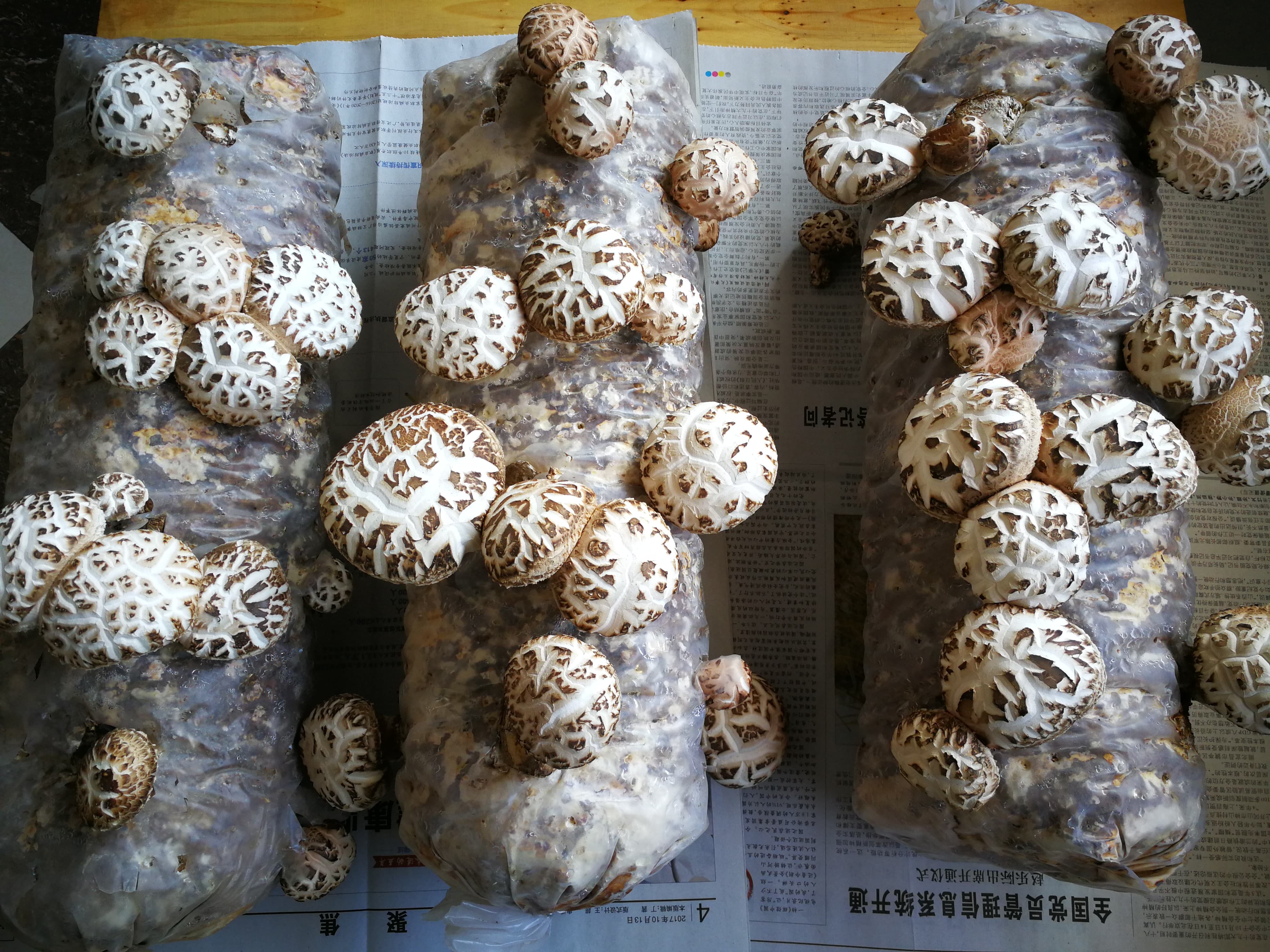
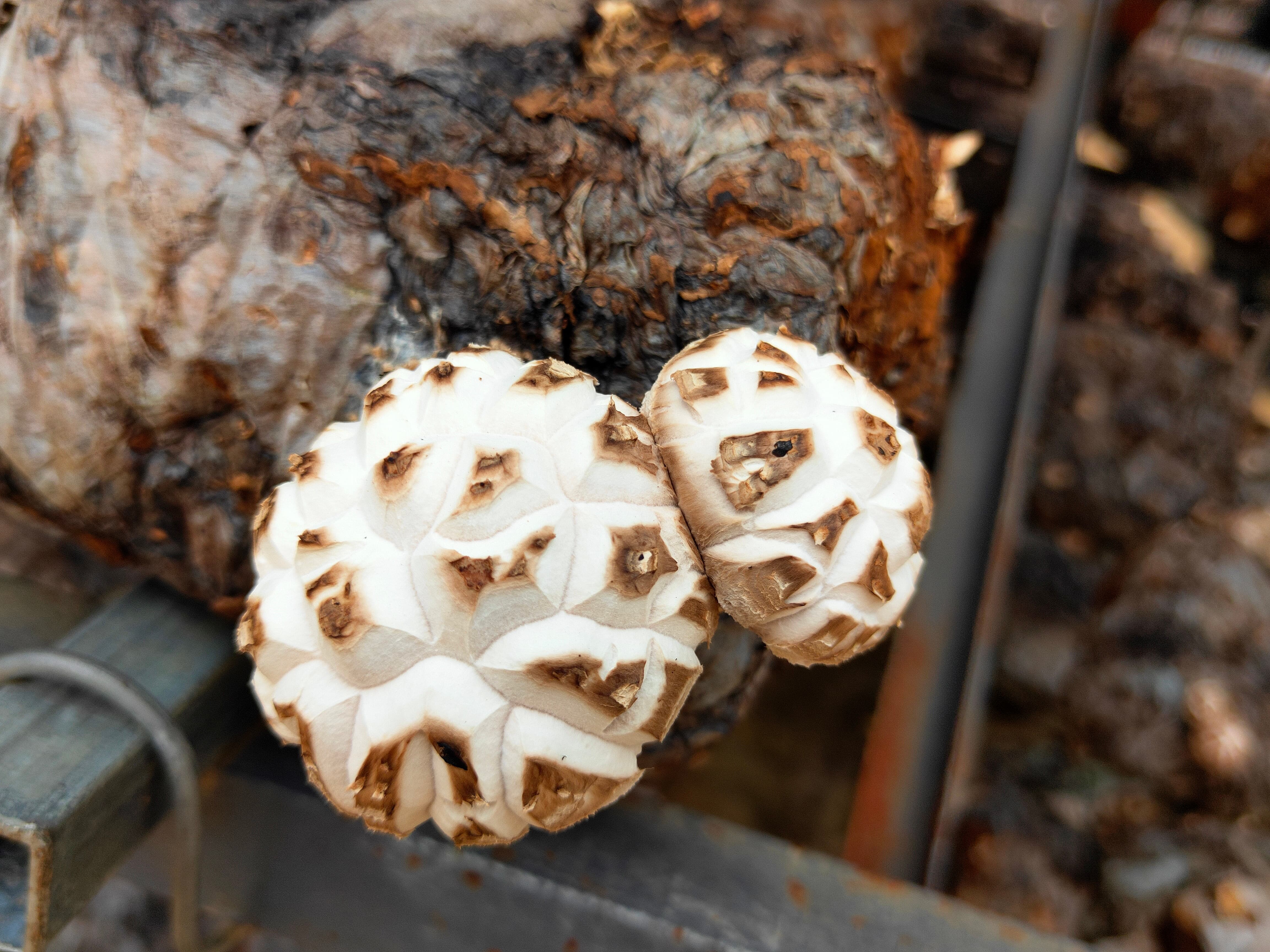
- Raw Materials: During my visits to Suizhou, I was deeply impressed by farmers who purchase Qinggang oak and other hardwoods, pulverizing them themselves to prepare the substrate. They value the source and quality of the wood and are willing to invest effort in this step. Careful selection of raw materials lays a solid foundation for subsequent production.
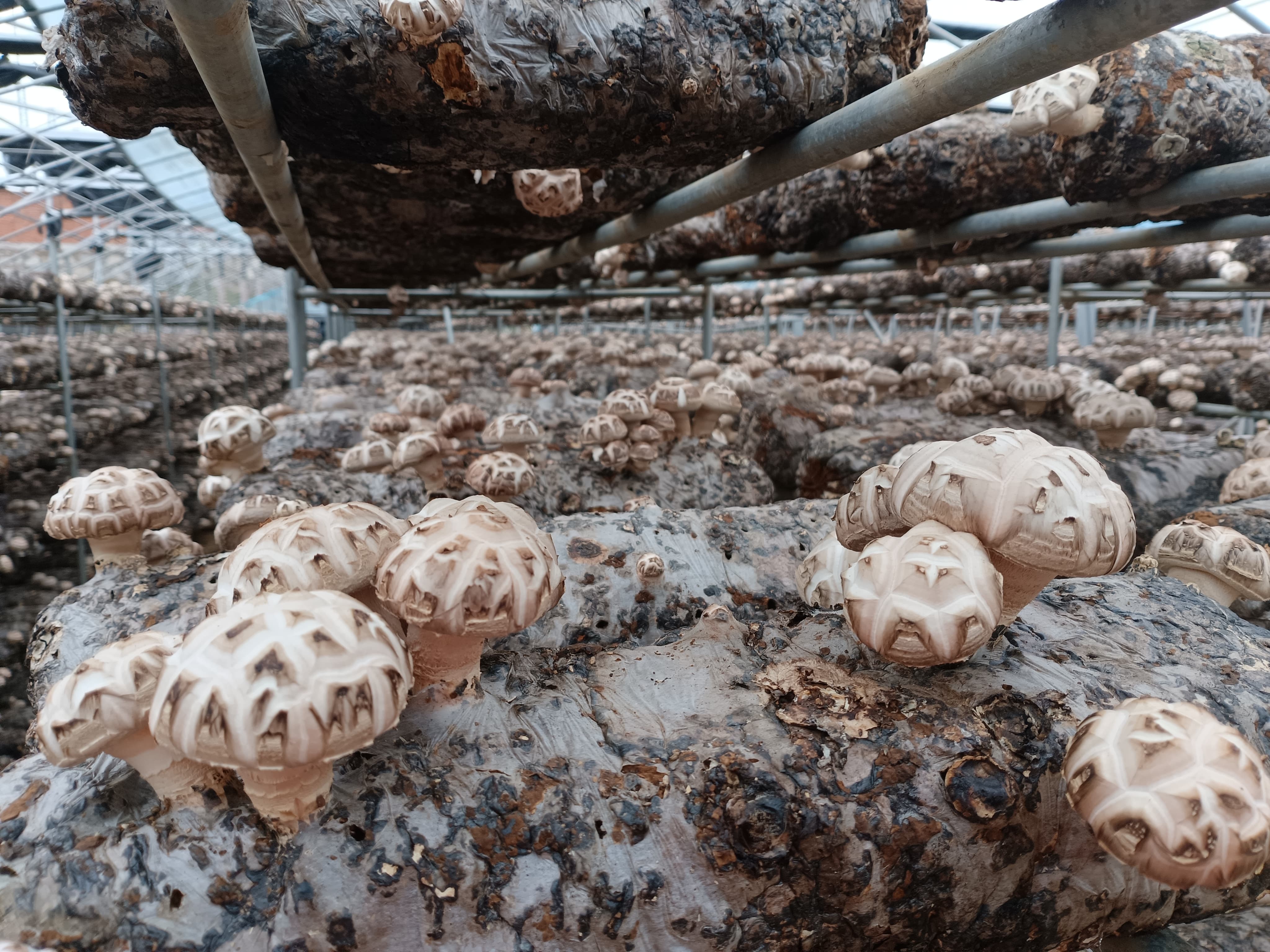
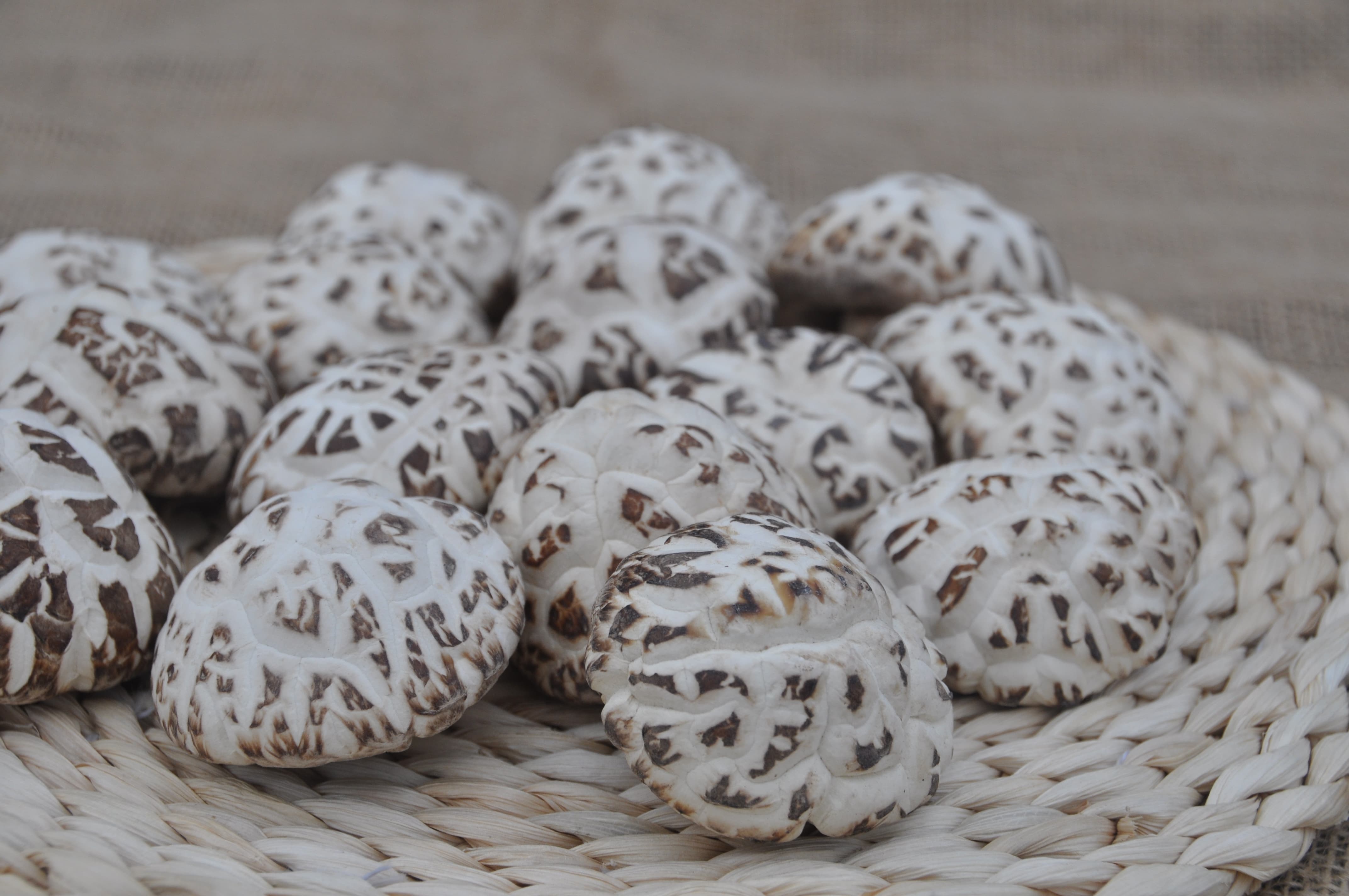
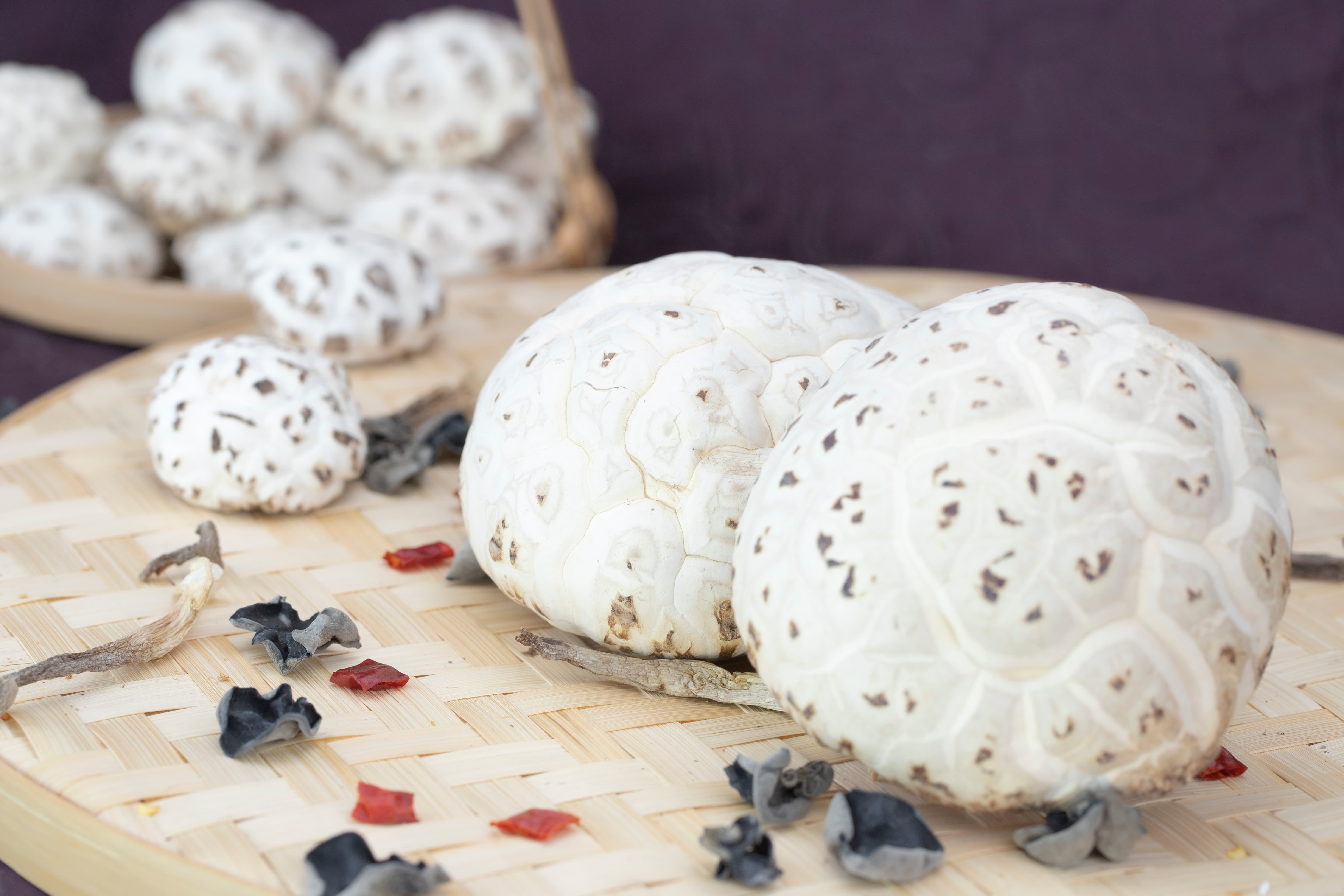
- Climate & Cultivation Methods: Local natural conditions, combined with the long-explored large-log cultivation model, create favorable conditions for cultivating premium flower mushrooms. The naturally formed white cracks on the mushroom cap, paired with compact and well-proportioned shapes, are simply delightful to look at. From a personal perspective, the cap shape and natural patterns of Suizhou's premium flower mushrooms are truly unforgettable.
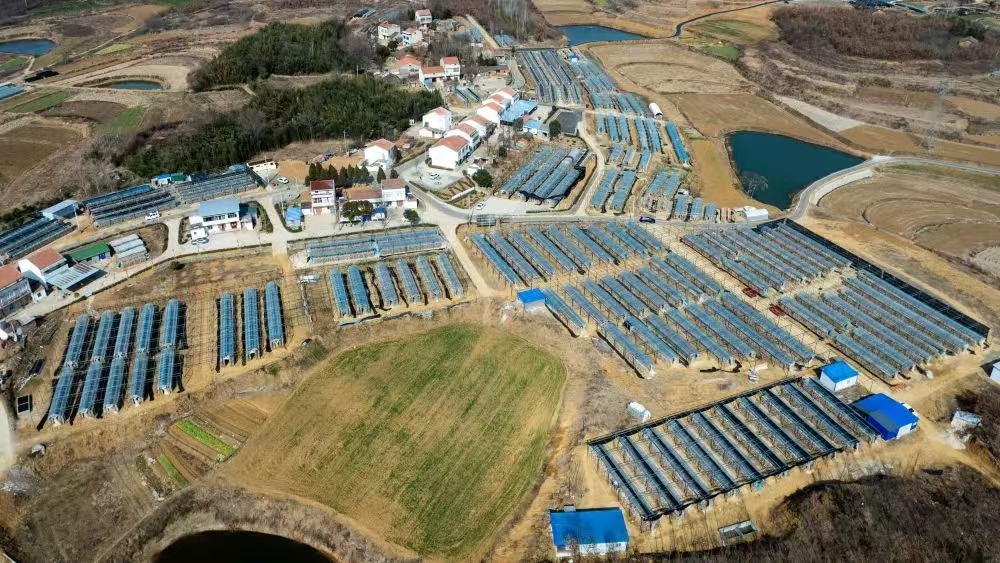
- Experience Accumulation: Underlying this are decades of accumulated experience among farmers. Knowing when mushrooms should emerge, how to manage them, and how to adjust when the weather changes are lessons learned crop after crop. What appears to be a simple mushroom shed or substrate log is actually built upon a deep human understanding of local conditions and skills honed through long-term production.
- Drying Technology: Turning great fresh mushrooms into great dried mushrooms requires mastering this critical step. Suizhou's long-standing production arrangements surrounding dried Xianggu seamlessly connect cultivation, harvesting, and drying, which has also driven improvements in related equipment.
Therefore, the excellence of Suizhou Xianggu is the combined result of natural conditions, raw material selection, cultivation experience, and drying craftsmanship. Isolating any single link is insufficient to explain its quality.
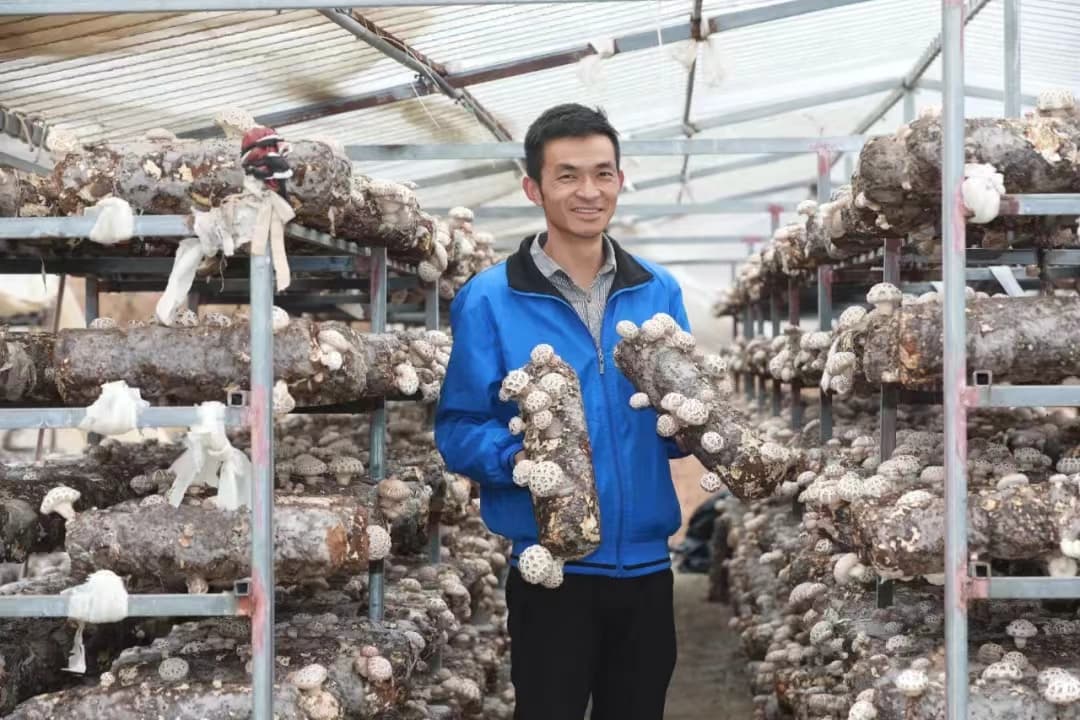
II. Moving From Regional Advantage to Industrial Advantage
Flower mushrooms easily catch the eye, but I would also like to talk about flat mushrooms (Bangu).
This March, when I tasted the local flat mushrooms in Suizhou, their rich aroma and savory flavor left an impression I still remember today. In my view, this rich and delicious flavor profile is a vital manifestation of Suizhou Xianggu's core competitiveness.
A single mushroom possesses both visible value and tasteable value.
The cap shape, natural patterns, and quality of flower mushrooms make them well-suited for high-end consumer and gift markets. Meanwhile, the flavor of flat mushrooms equally deserves due recognition. Different uses place different demands on mushrooms; we cannot measure the value of all Xianggu using appearance as the sole yardstick.
The core competitiveness of Suizhou Xianggu lies in its complete industrial capability to consistently produce and steadily supply high-quality dried mushrooms. The appearance and quality of premium flower mushrooms, along with the aroma and taste of premium flat mushrooms, are the reasons buyers choose Suizhou. Underpinning these qualities is the long-term collaboration and expertise built among local farmers, processors, equipment manufacturers, and operators: connecting every link from strains, raw materials, cultivation, and drying to grading and sales. Only by thoroughly studying and passing down this set of skills can buyers be assured of reliable quality with every purchase.
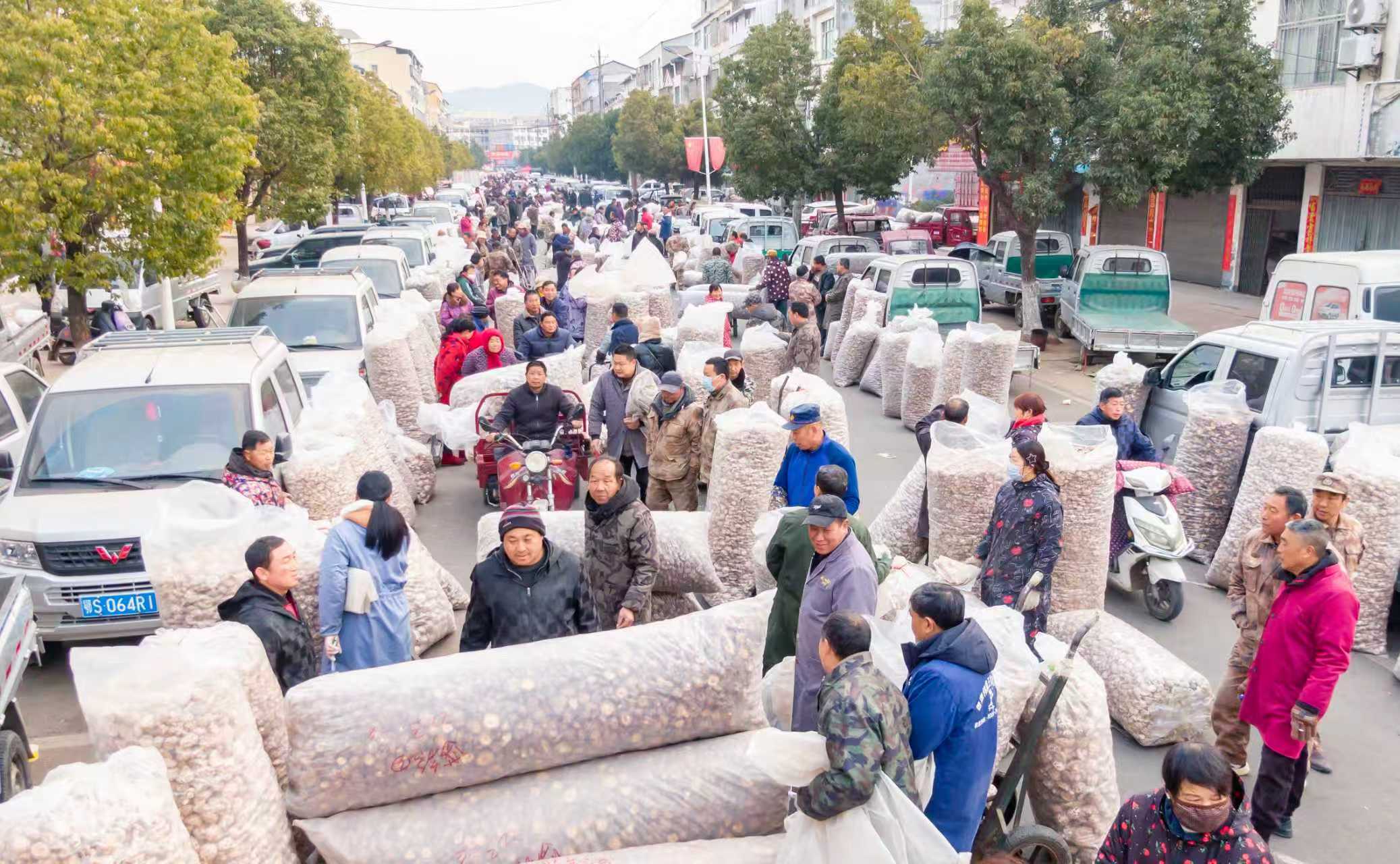
However, having great quality is only part of the equation; we must also see whether this quality commands its due market value. Past operational practices centered around exports and Southeast Asian markets accumulated clients and distribution channels for Suizhou. Today, further reflection is required: In pursuing export volume, did we sufficiently differentiate product quality and application? Has the true value of Suizhou's premium Xianggu been genuinely recognized by buyers?
My assessment is that Suizhou's premium Xianggu should position itself as a representative of high-quality Chinese mushrooms when exploring markets. Moving forward, we must shift away from a primary reliance on volume-based competition toward quality-based competition, ensuring this industrial capacity commands its rightful market value, encouraging buyers to choose Suizhou for its quality, and rewarding enterprises and farmers with better returns for delivering excellence.
Flower mushrooms must allow consumers to appreciate their quality, while flat mushrooms must enable catering and food enterprises to extract their functional value; every batch of delivered products must give buyers peace of mind. Therefore, studying Suizhou means studying both an individual mushroom and how to continuously produce great mushrooms. Which experiences can be codified into clear operational standards? How can batch-to-batch variations be reduced? How can grading by use be established so buyers understand what they purchase and use it stably? Solidifying these efforts will transform quality advantages into market advantages.
III. Looking Beyond Mushrooms: Embracing the Macro-Food Industry
To widen the path of quality competition, Xianggu must enter larger food markets.
I have always believed in looking at mushrooms from beyond the mushroom industry itself. Suizhou already possesses years of export experience, as well as a processing foundation in mushroom paste, canned goods, and more. Over the next three to five years, a space worthy of further expansion is allowing the flavor and processing value of Xianggu to be more fully applied across the catering and food manufacturing industries.
Flower Mushrooms Deepening High-End Consumption
Clearly differentiate quality and articulate unique traits so that consumers willing to pay for premium products recognize them, trust them, and return for repeat purchases.
Flat Mushrooms Entering Catering & Food Manufacturing
Leverage flavor advantages by pursuing a quality-raw-material path. Price and value should align with flavor, quality, and functional results, encouraging food companies to purchase continuously.
I know friends working in compound seasonings, hot pot soup bases, mushroom broths, and food R&D who are constantly searching for suitable mushroom ingredients. Mushroom growers may not fully understand the specific demands of food companies, while food companies may not know what great offerings production regions hold. Someone needs to bridge the gap between the two.
My view is clear: Send the samples in and launch application trials.
What aroma, flavor, and texture does the buyer need? How does the ingredient perform after processing? What specifications, stability, and pricing requirements exist? Discussing these questions clearly leads to co-developing dedicated raw materials with explicit purposes and stable qualities.
This should also extend upstream into breeding. Fresh consumption, drying, seasoning, and other processing uses impose distinct requirements on mushroom varieties. Breeding, cultivation, and processing should better respond to practical applications. Directions such as mushroom meat and fungal protein are also worth investigating in conjunction with enterprise capabilities. We must carefully understand the dietary habits of younger consumers, weighing flavor, nutrition, convenience, and price together. Only when developed products find willing buyers and repeat purchasers can enterprises operate sustainably.
Embracing macro-food means production regions and food companies jointly understanding and developing Xianggu. By channeling market demands into production and finding new applications for production strengths, the value of Xianggu will continually be unveiled.
IV. Building Quality Into Brands and Infusing Brands With Cultural Connotation
As products enter larger markets, another question must be answered: Why do buyers remember Suizhou, and why do they continue to choose Suizhou? This brings us to branding and culture.
I have always maintained that the quality, reputation, and influence accumulated by an industry over the long term must ultimately manifest through its brand. Suizhou Xianggu's regional brand building warrants sustained effort, especially in studying how to enhance regional brand strength.
Brand strength depends on its actual impact in the marketplace. When consumers hear "Suizhou Xianggu," can they immediately associate it with distinct quality characteristics? When food enterprises make purchases, do they regard Suizhou as a trusted production region? When different enterprises use this brand, can they jointly uphold quality and reputation? These questions determine whether a brand can genuinely help products enter markets and win recognition. Regional brand development requires joint investment from government, enterprises, and producers. The government fosters public services and brand protection, enterprises faithfully honor quality commitments, and producers grow every batch of mushrooms with care—only then does a brand have sustained support.
Over three years of cooperation with Suizhou, the municipal Party committee and government's care and emphasis on the mushroom industry have left a deep impression on me. From municipal leaders to heads of agricultural departments and frontline staff, everyone speaks about Xianggu like an expert naming treasures. This familiarity and dedication to the industry were tangible during our exchanges, showing me the local leadership's determination to drive long-term industrial development.
Xianggu is tied to the income of farmers, the growth of enterprises, and the employment and entrepreneurship of young people. Doing this specialty industry well supports the livelihoods of numerous families and forms a substantive part of rural industrial development. Furthermore, a brand needs its own cultural connotation. Suizhou boasts Emperor Yan Shennong culture, chime bell culture, and Mount Dahong culture, alongside rich stories of mushroom cultivation, drying, culinary traditions, and trade. Xianggu culture should grow organically from this land and the genuine lives of its producers. How farmers select raw materials, how they adjust management with changing weather, how drying technicians master heat control, how merchants bring products overseas, and why young people are willing to return to continue their family's legacy—all of these stories deserve to be recorded and expressed. Telling these authentic human stories well helps consumers better understand the craftsmanship behind a mushroom, while empowering the younger generation to better appreciate the value of their chosen career. With credible quality commitments and distinct cultural brand identities, Suizhou Xianggu can forge more enduring recognition and competitiveness.
V. From Product Exports to Model Exports Across the Entire Xianggu Industry Chain
Clear quality grading, effective application by food enterprises, and stable product delivery provide a brand with a solid market foundation. Building upon this, Suizhou's years of accumulated industrial capacity can further evolve into a component of international cooperation.
Here, I particularly want to highlight edible mushroom machinery. Some of the equipment I encountered in Suizhou is compact yet practical, focused precisely on concrete production needs. What I value is precisely this "small yet exquisite" philosophy: solving real problems, remaining affordable and usable for operators, with accessible operation and maintenance. Equipment manufacturers interact with mushroom growers over long periods, understanding frontline challenges. When producers raise issues, manufacturers improve equipment—this tight connection is itself part of industrial accumulation.
During my inspection trips to various countries, I felt that developing edible mushrooms requires assessing what level of investment local operators can bear and what scale of production they can organize. Equipment and production methods tailored to small and medium-sized operators possess distinct market space. The value of edible mushroom machinery also lies in its ability to serve as an important carrier for exporting technology and production experience. By connecting equipment with strains, cultivation, drying, training, maintenance, and management, overseas partners gain better conditions to launch production.
Therefore, over the next three to five years, a direction worthy of Suizhou's focused expansion is transitioning from exporting products like dried Xianggu and canned mushrooms to exporting the entire Xianggu industry chain model.
- Step 1: Solidify the Foundation: Solidify quality grading, food applications, and stable delivery first, while stepping up brand building so domestic and international buyers clearly understand product features and uses, enabling enterprises to accumulate experience in continuous supply, co-R&D, and client service.
- Step 2: Overseas Pilots: Select capable overseas partners with appropriate conditions to launch pilot cooperation projects, interconnecting strains, cultivation, equipment, processing, training, maintenance, and sales step by step. We must verify both whether quality mushrooms can be grown and whether they can be successfully sold, ensuring both partners secure reasonable returns.
- Step 3: Contextualized Promotion: Once these links run smoothly, promote them gradually based on local conditions in different regions. Research must clarify local raw materials, suitable strains, target markets, staff training needs, and equipment repair logistics. China's experience in helping farmers boost incomes through edible mushroom production can also serve as a key component of cooperation.
Only when overseas partners can learn, produce, sell, and earn reasonable returns does cooperation acquire a lasting foundation. Product exports established market connections, whereas industry chain cooperation extends these connections further into joint production, technical services, and talent cultivation. This is a path well worth earnest exploration as Suizhou broadens its future development space.
VI. What Excites Me Most: Suizhou's "Second-Generation Mushroom Growers"
What excites me most is Suizhou's "second-generation mushroom growers" (Guo Erdai). Among the dozen-plus young people I have interacted with, some graduated from Wuhan University, Huazhong Agricultural University, and Huazhong University of Science and Technology, while others previously worked in foreign enterprises, state-owned enterprises, or central enterprises before returning to Suizhou to take over their family's mushroom enterprise. Highly educated yet willing to settle down to conduct research and manage production, they hold a deep affection for Xianggu and are eager to bring back fresh knowledge and methods. I believe these second-generation growers represent true hope.
It is truly inspiring to see the accumulated experience of the older generation seamlessly connect with the knowledge and inquisitive spirit of the younger generation within this industry. They come from diverse academic backgrounds, ranging from machinery to management. Many returned to their hometowns to start businesses at the persuasion of their parents. Through interacting with them, I sensed that this emotional attachment to Xianggu and their grounded research-oriented drive constitute a highly precious force propelling the industry toward the future.
From quality grading and food R&D to equipment improvement and overseas pilot cooperation, every step requires dedicated people. Only by combining the knowledge, work experience, and professional capabilities of the younger generation with the production experience of the older generation can these development directions translate into concrete products, services, and collaborations.
Suizhou also boasts the Xianggu Academy, which has given me added expectations for the industry's talent succession. The significance of the academy is worth evaluating within the broader horizon of long-term industry growth. By bringing frontline production experiences and challenges into the classroom and aligning talent cultivation with corporate demands, more young people can gain both professional expertise and an understanding of production and management, continuously replenishing the industry's talent pool. Future-oriented industry chain model exports also require personnel capable of explaining technology, conducting training, understanding equipment, and delivering services. The Xianggu Academy can explore playing an active role in these areas, ensuring talent training serves Suizhou while providing foundational support for broader industrial cooperation. The second-generation growers show us concrete individuals, while the Xianggu Academy prompts us to think further about continuous talent cultivation. When people are willing to return, have places to learn, find opportunities to showcase their skills, and secure fair rewards through hard work, this cause will continuously attract successors.
VII. Enabling the Industry to Truly Benefit From This Gathering
In organizing this Suizhou Xianggu Conference, our goal is to articulate three questions clearly: Where does Suizhou Xianggu's excellence lie? Where does its core competitiveness reside? Where is it heading over the next three to five years? More importantly, through this conference, we aim to transform awareness into consensus, consensus into cooperation, and allow the industry to genuinely benefit from it.
Let premium flower mushrooms command premium prices, and let premium flat mushrooms—valued for their aroma and umami—become recognized premium raw materials for the food industry, securing fair pricing, reasonable corporate profits, and stable incomes for farmers.
Enable Suizhou Xianggu to stand firm on its quality, resonate loudly through its brand, carry weight through its culture, and transition from product exports such as dried Xianggu and canned mushrooms toward model exports of the entire industry chain—bringing out a comprehensive suite of expertise spanning strains, cultivation, edible mushroom machinery, processing, talent training, and market connection to develop jointly with overseas partners.
Our confidence stems from the Suizhou municipal Party committee and government's high regard for the mushroom industry, the local officials' familiarity and dedication to the sector, as well as the expertise of farmers, the commitment of the second-generation growers, and the talent development of the Xianggu Academy.
📅 2026 Suizhou Xianggu Conference Attendance & Exchange Information
- Conference Theme: Tech Empowerment · Quality Leadership · Connecting the World Through Chains
- Dates: Registration on December 8, 2026; Official Meetings on December 9–10, 2026
- Location: Suizhou, Hubei, China
- Official Website: www.chinamushroomdays.com
Ensuring quality products yield rewarding returns and allowing young people to see a promising future worth investing in back home—this is the sustainable, high-quality development we look forward to and the direction this conference jointly strives to promote.
Suizhou Xianggu, Fragrance Perfuming the World!
Liu Ziqiang
November 17, 2026