Table of Contents
00001. Mushroom Cultivation: Technology and Sustainability
00002. Mushroom Powder Production Technology and Core Equipment
00003. Global Market Trends: Demand Map Across Six Continents
00004. Sales Model Innovation
00005. Future Challenges
Chapter 1 Mushroom Cultivation: Technology and Sustainability
1.1 Mushroom Species and Cultivation Selection
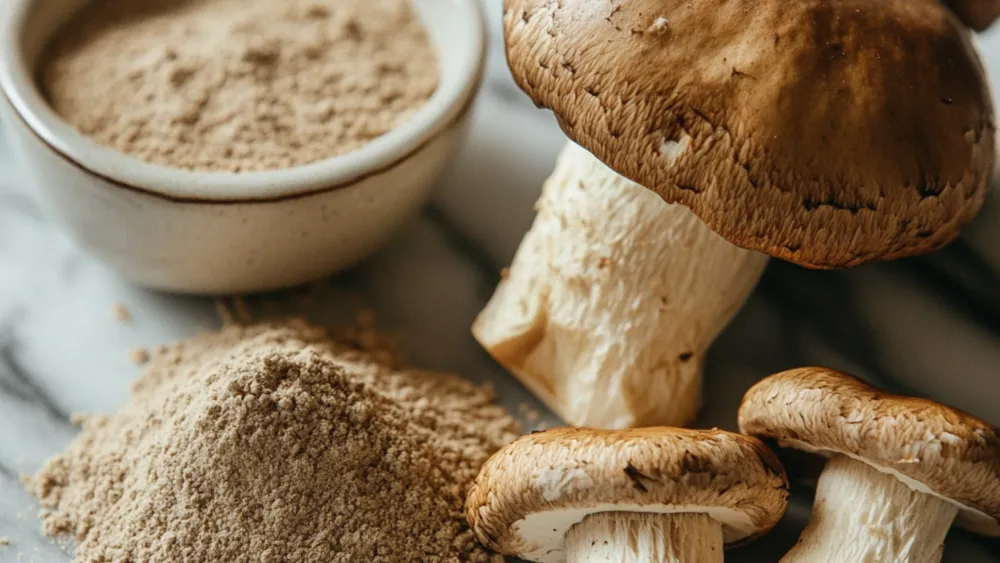
The raw materials for mushroom powder mainly originate from the following categories of high-value mushrooms:
· Functional Mushrooms: Reishi, Cordyceps, Lion's Mane (neural support, immunity boost);
· Edible Mushrooms: Shiitake, Oyster Mushroom, Maitake (flavor enhancement, nutritional supplement);
· Emerging Varieties: Lion's Mane (cognitive function), Chaga (antioxidant).
Comparison of Cultivation Technologies
| Cultivation Mode |
Advantages |
Limitations |
| Log Cultivation |
Rich flavor, suitable for Reishi |
Long cycle (6-24 months) |
| Bag Cultivation |
High yield and fast (3-6 months) |
Requires strict temperature and humidity control |
| Vertical Farming |
High space efficiency, year-round production |
High initial investment cost |
1.2 Sustainable Cultivation Practices
· Waste Recycling: Replacing traditional sawdust with coffee grounds and straw to reduce forest resource consumption (Case: US company Back to the Roots uses coffee grounds to grow oyster mushrooms);
· Carbon Neutral Strategy: UK company Smallhold adopts vertical farms powered by renewable energy, reducing the carbon footprint per unit yield by 40%;
· Biological Control Technology: Dutch company Mycelia develops disease control solutions based on antagonistic microorganisms to reduce the use of chemical pesticides.
Chapter 2 Mushroom Powder Production Technology and Core Equipment 2.1 Production Process Overview
· Raw Material Processing: Cleaning and removing impurities, slicing to 3-5mm thickness (improving drying efficiency);
· Drying Technology:
· Freeze Drying (-50℃ vacuum): Retains over 90% of active ingredients (such as β-glucan), cost around $12/kg;
· Hot Air Drying (60-80℃): Cost is only $3/kg, but loses 30% of heat-sensitive nutrients;
· Ultrafine Pulverization: Utilizing air jet mills (particle size ≤ 20μm) to enhance bioavailability;
· Sterilization and Packaging: Irradiation sterilization (Cobalt-60) ensures microbial safety, and nitrogen-filled aluminum foil bags extend shelf life.
2.2 Core Equipment List and Costs
| Equipment |
Function |
Representative Brands |
Investment Cost |
| Tunnel Dryer |
Large-batch hot air drying |
Bühler (Switzerland) |
500,000 - 2,000,000 |
| Vacuum Freeze Dryer |
Retain active ingredients |
GEA (Germany) |
2,000,000 - 5,000,000 |
| Air Jet Mill |
Ultrafine pulverization to cell wall breaking |
Hosokawa (Japan) |
300,000 - 800,000 |
| X-ray Inspection Machine |
Foreign object and microbial screening |
Thermo Fisher |
100,000 - 250,000 |
Chapter 3 Global Market Trends: Demand Map Across Six Continents
3.1 North America
· Market Size: Reached $820 million in 2023 (accounting for 35% globally), CAGR 11.3%;
· Consumption Scenarios:
· Reishi powder → immune supplements (e.g., Four Sigmatic coffee addition);
· Lion's Mane powder → brain health products (e.g., Real Mushrooms capsules);
· Policy Dividend: The US DSHEA Act allows functional claims, driving innovation.
3.2 Europe
· Growth Poles: Led by Germany and France, market size reached $350 million in 2023;
· Certification Barriers: EU ECOCERT organic certification increases cost by 15%, but offers a premium capacity of 30%;
· Channel Transformation: Pharmacy channels account for 40% (e.g., French Ladrôme Reishi powder entered pharmacies).
3.3 Asia
· Integration of Traditional Medicine and Modern Technology:
· China: Shiitake mushroom powder as soup ingredients (annual demand of 12,000 tons), CAGR 8%;
· Japan: Government subsidizes functional mushroom R&D (such as Amino Up's β-glucan extraction technology);
· India: Ayurvedic medicine drives Reishi powder exports, with exports to Europe and America growing by 25% in 2023.
3.4 Other Regions
· Africa: Oyster mushroom powder poverty alleviation projects emerge in South Africa and Kenya (low-cost protein source);
· South America: Brazilian mushroom powder enters the Middle East market through Halal certification;
· Oceania: Australian regulations tighten, requiring TGA certification which limits SME entry.
Chapter 4 Sales Model Innovation
4.1 B2B: Vertical Integration of Raw Material Supply
· Case: US Om Mushroom supplies Reishi powder to meal replacement brand Huel, with an agreed price of $45/kg;
· Pain Point: Long payment terms (90-120 days), needing to cooperate with customized client testing (such as heavy metals, pesticide residues).
4.2 B2C:
· Content Marketing for DTC Brands:
· Strategy: Educational marketing: Canadian FreshCap popularizes mushroom knowledge via blogs and podcasts, boosting conversion rate by 70%;
· Subscription Model: Shroom Tea delivers mixed mushroom powder monthly, with a repeat purchase rate of 52%.
4.3 Emerging Models:
· Web3 Technology Application: Dutch Mushroom Chain uses NFTs to record cultivation data, gaining a 20% premium;
· Community Operations: Discord community "Fungi Future" gathers 30,000 enthusiasts to crowdfund new product R&D.
Chapter 5 Future Challenges
5.1 Technical Bottlenecks
· Standardization of Active Ingredients: Triterpene content in different batches of Reishi powder fluctuates by ±15%, requiring AI-driven process optimization;
· Supply Chain Resilience: Dryer delivery cycles in North America extended to 18 months in 2022, impacting capacity expansion.
5.2 Regulations and Consumer Perception
· EU Novel Food: Lion's Mane powder requires spending €250,000 to apply for market access, hindering SMEs;
· "Mushroom = Hallucinogenic" Misconception: 34% of US consumers mistakenly associate functional mushrooms with psychedelic mushrooms, requiring large-scale public education.
5.3 Sustainability Pressures
· Water Consumption: Producing 1kg of mushroom powder requires 2.5 tons of water (data from Wageningen University, Netherlands);
· Packaging Revolution: UK Mushroom Packaging develops mycelium biodegradable bags, with costs 40% higher than plastic.
The golden decade of the mushroom powder industry, spanning from the biological revolution in cultivation technology to the consumer wave in functional foods, stands at the intersection of the health economy and sustainable development. Enterprises that break through in standardized production, consumer education, and green supply chains will be well-positioned to seize opportunities in this "fungal economy."
创新博览会LOGO.png)
.webp)

创新博览会LOGO-white.png)