Carbon Neutrality Advantages of the Edible Fungi Industry: From Production to Supply Chain
Against the background of global response to climate change, carbon neutrality has become a key target for the development of various industries. Relying on its unique biological characteristics and low-carbon production mode, the edible fungi industry demonstrates significant carbon neutrality advantages. This advantage runs through every link from production to the supply chain, providing new ideas and paths for sustainable development.
First, the edible fungi cultivation process itself has significant low-carbon attributes. According to data from the Food and Agriculture Organization of the United Nations (FAO), the carbon emission per kilogram of edible fungi produced is only 0.5-1.2 kg CO2 equivalent, a value far lower than that of animal husbandry (beef production carbon emission is 15-30 kg CO2 equivalent). The low-carbon characteristics of edible fungi mainly stem from the following aspects:
Recycling of raw materials is an important manifestation of the low-carbon attribute of the edible fungi industry. Cultivation of edible fungi usually uses agricultural waste (such as straw, bran, etc.) as a substrate. These wastes are often burned in traditional treatment methods, generating a large amount of greenhouse gas emissions such as methane. By converting them into edible fungi substrates, it not only reduces carbon emissions caused by waste burning, but also realizes the resource recycling. For example, in some agricultural areas, farmers use waste crop straw for edible fungi cultivation, which not only lowers production costs, but also reduces environmental pollution.
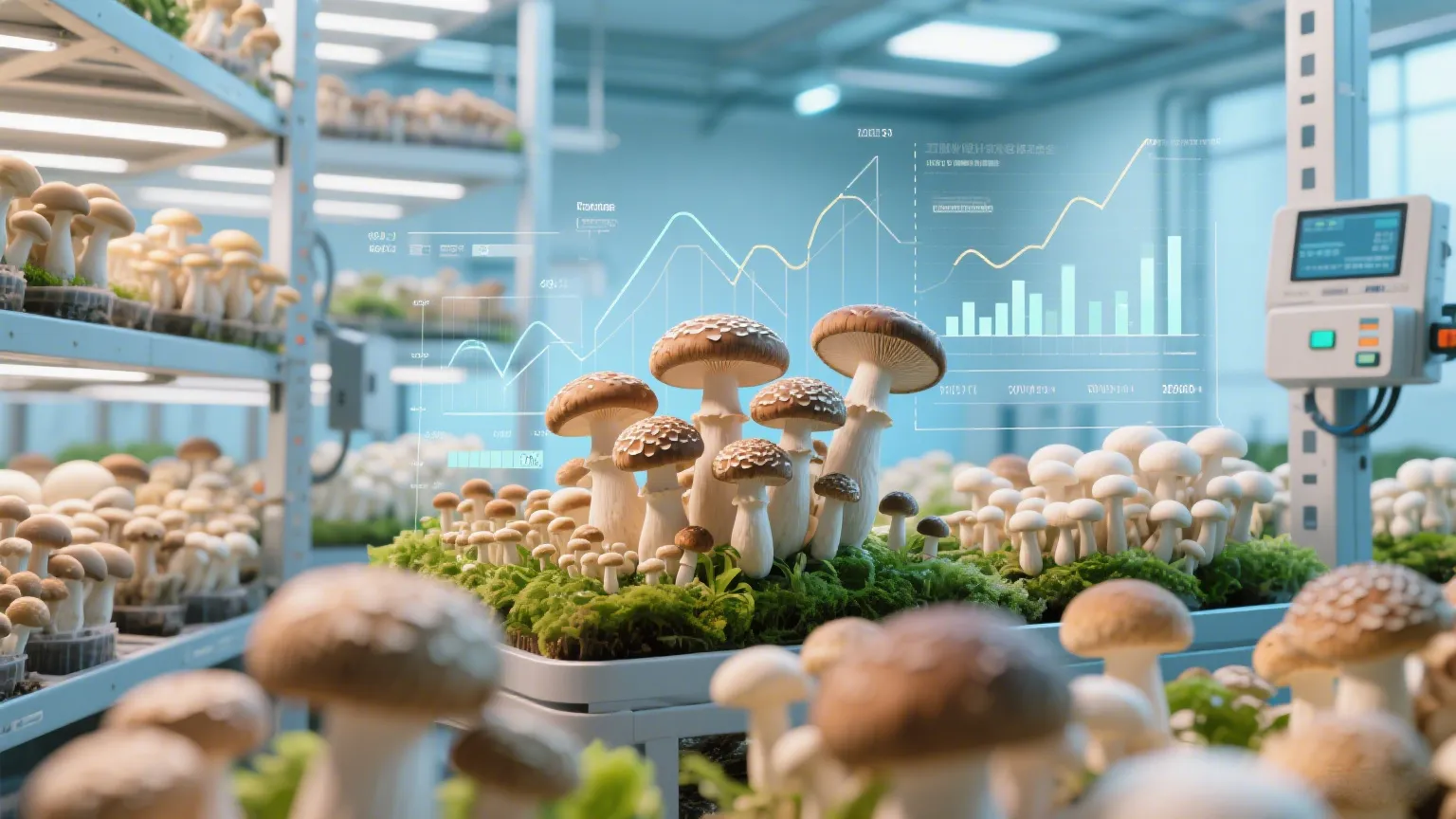
Low energy consumption production is also a major advantage of the edible fungi industry. Compared with traditional crops, edible fungi have a shorter growth cycle and higher yield per unit area. This means that within the same land resource and time cycle, edible fungi can produce more products with lower energy consumption. Studies show that energy consumption of edible fungi can be reduced by more than 40% compared with traditional crops. For instance, the growth cycle of shiitake mushroom is usually 3-4 months, while that of crops like wheat takes more than half a year. In addition, the cultivation environment of edible fungi is relatively controllable. Through modern greenhouses and mushroom houses, growth conditions can be further optimized to reduce energy consumption.
Carbon sink potential is another highlight of the edible fungi industry. Mycelium can fix organic carbon in the soil during its growth, thereby reducing carbon emissions. Cultivation of some edible fungi varieties, such as Ganoderma lucidum, can also promote forest ecological restoration. The growth of Ganoderma lucidum requires certain tree shade and soil moisture; its cultivation process can improve soil structure, increase soil organic matter content, and thus enhance soil carbon sink capacity. This ecological restoration function not only helps reduce carbon emissions, but also improves the ecological environment, achieving a win-win scenario of ecological and economic benefits.
China, as the world's largest producer of edible fungi, has an annual output exceeding 40 million tons, and its industrial upgrading is of great significance to global emission reduction. In recent years, various regions in China have actively explored low-carbon development models for the edible fungi industry and achieved remarkable results. For example, Gutian County in Fujian Province implemented the "fungi-rice rotation" model, achieving an annual carbon sink increase of 120,000 tons in farmland. This model not only improved land utilization, but also reduced chemical fertilizer and pesticide use through the organic combination of fungi cultivation and rice planting, further lowering carbon emissions. In addition, Gutian County further enhanced the low-carbon level of the edible fungi industry by optimizing cultivation technology and promoting energy-saving equipment.
From the perspective of the supply chain, the low-carbon advantages of the edible fungi industry are equally significant. In processing, adopting modern methods such as low-temperature freeze-drying technology can reduce energy consumption while retaining the nutrients of edible fungi to the maximum extent. In transportation, optimizing cold chain logistics plans reduces energy consumption and carbon emissions during transport. For example, Yunnan matsutake's cold chain low-carbon transport plan significantly lowered emissions during transportation by using efficient refrigeration equipment and optimizing transport routes.
New B2B Procurement Trend: Green Certification Drives Trade Growth
With increasing global attention to climate change, international buyers' demand for low-carbon agricultural products is rising rapidly. The pilot implementation of the EU Carbon Border Adjustment Mechanism (CBAM) has further boosted the market competitiveness of low-carbon agricultural products. In this context, the edible fungi industry, with its low-carbon characteristics, has gradually become a popular category in international trade.
The implementation of the EU CBAM provides new market opportunities for low-carbon agricultural products. According to CBAM regulations, imported products into the EU with a lower carbon footprint than similar products will receive tariff preferences. This policy incentivizes agricultural producers worldwide to actively reduce carbon emissions to enhance product competitiveness in the EU market. Processed edible fungi products have gained a significant advantage in the EU market due to their lower carbon footprint. For example, some low-carbon certified canned edible fungi and dried shiitake products received tariff reductions because their carbon footprint is lower than similar vegetable products, making them more competitive in price.
At international exhibitions, low-carbon mushroom products have become a showcase focus. These products include circular economy substrates, energy-saving cultivation equipment, and carbon-labeled products. Circular economy substrates are low-cost substrates developed using industrial by-products like coffee grounds and sugarcane bagasse. These substrates lower production costs and cut industrial waste emissions. For example, a substrate developed by a Dutch enterprise using coffee grounds provided a high-quality growth medium for edible fungi while reducing coffee grounds disposal costs and environmental pressure.
Energy-saving cultivation equipment is also a highlight at exhibitions. Modern equipment applications like IoT temperature control systems can significantly lower mushroom house energy consumption. By precisely controlling temperature, humidity, and ventilation, these devices optimize the growth environment for edible fungi and cut energy waste. For instance, an IoT temperature control system developed by a Chinese enterprise can reduce mushroom house energy consumption by over 30% while improving mushroom yield and quality.
Carbon-labeled products represent a major trend in international trade. As consumer awareness of low-carbon products grows, carbon labels become important product markers. Export categories such as dried shiitake and canned Baimu mushrooms certified by ISO 14067 are favored in international markets due to clear carbon footprint statements. According to the "2024 Global Edible Fungi Trade Report", the average export unit price of mushroom products with carbon footprint declarations increased by 15%, with annual procurement growth reaching 25% in European, Japanese, and South Korean markets. This shows that low-carbon certification adds product value and brings higher economic benefits to producers.
Industrial Chain Innovation: Breakthroughs from Technology to Business Models
With ongoing technological progress and changing market demand, industrial chain innovation in the edible fungi industry is accelerating. From commercializing rare species to reducing emissions in processing and building cross-border green channels, innovations in the edible fungi industry enhance competitiveness and offer new perspectives for sustainable development.
Commercialization of rare species is a key direction of edible fungi innovation. Taking morels as an example, this rare mushroom sees strong market demand due to its unique taste and nutritional value. However, traditional morel cultivation relied on forest resources, exerting pressure on the ecological environment. In recent years, breakthroughs in factory cultivation technology made commercial morel farming possible. Factory cultivation improves yield and quality while reducing reliance on forest resources, achieving a win-win for ecological protection and industry growth.
Emission reduction in processing is another key focus of edible fungi innovation. Application of low-temperature freeze-drying technology reduces energy consumption while retaining nutritional components. Compared with traditional hot-air drying, low-temperature freeze-drying cuts energy consumption by over 30%. Furthermore, it extends shelf life and reduces loss during transport and storage. For instance, dried shiitake produced by a Japanese enterprise using freeze-drying technology retained nutrients and extended shelf life, earning broad acclaim in international markets.
Building cross-border green channels creates new opportunities for international trade in edible fungi. As global trade evolves, cold chain logistics plays an increasingly vital role. Surging demand for Yunnan matsutake in Southeast Asian markets drove the development of low-carbon cold chain transport plans. By optimizing refrigeration equipment and routes, transport costs and carbon emissions for Yunnan matsutake fell significantly. For example, a low-carbon cold chain transport solution developed by a Chinese enterprise lowered transport costs for Yunnan matsutake by 20% and reduced carbon emissions by 30%.
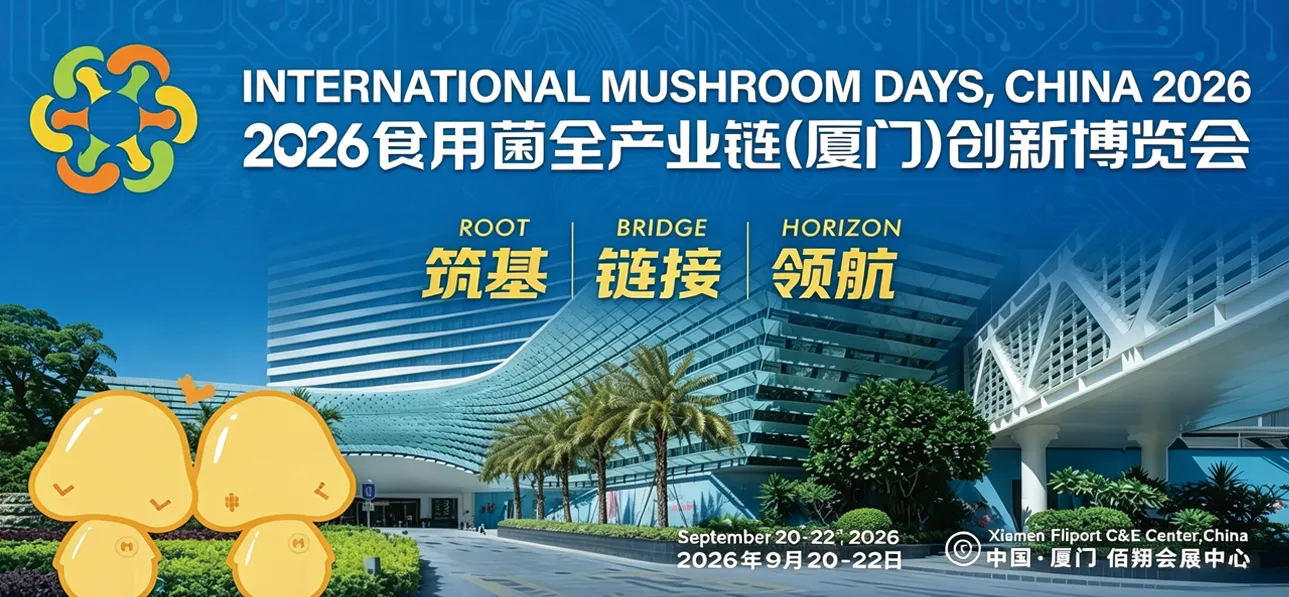
The 2025 Xiamen Edible Fungi Expo will present cutting-edge innovations in the edible fungi industry. The concurrently held "Carbon Neutrality and Edible Fungi Industry Summit" will publish the "White Paper on Emission Reduction in China's Edible Fungi Industry" and invite buyer delegations from the Netherlands, Canada, and other nations to connect with low-carbon suppliers. This provides a platform for cooperation between producers and buyers and gives vital guidance for sustainable industry growth.
Conclusion: Seizing the First-Mover Advantage in Green Trade
As global carbon neutrality goals accelerate, low-carbon development in the edible fungi industry is not only about environmental responsibility, but is key to opening high-end markets. For B2B enterprises, planning low-carbon supply chains in advance and joining industry standard formulation will be crucial for future competition.
The carbon neutrality practice of the edible fungi industry, from raw material recycling and low-energy production at the farm level to low-carbon processing and transport in the supply chain, displays remarkable environmental and economic benefits. Through green certification and application of low-carbon tech, the competitiveness of edible fungi products in international trade keeps rising. Growing B2B buyer demand for low-carbon mushroom products opens broad market space for industry growth.
For enterprises, proactively laying out low-carbon supply chains is a vital strategy to seize green trade opportunities. By optimizing production flows, applying low-carbon tech, and contributing to industry standard setting, companies can cut carbon emissions, boost product value, and raise market competitiveness. For example, some companies collaborating with research institutes to develop new low-carbon cultivation techniques and processing equipment achieved notable economic and environmental results.
Simultaneously, participating in industry standard formulation is an important way for enterprises to boost competitiveness. By shaping standards, businesses better grasp market trends and enhance industry influence. For example, leading enterprises setting edible fungi carbon footprint standards standardized industry development while winning more market opportunities for their own products.
In short, the carbon neutrality practices of the edible fungi industry offer new concepts and pathways for global sustainable development. Through technological innovation, business model breakthroughs, and supply chain optimization, the edible fungi industry can achieve low-carbon growth and gain a competitive edge in green trade.
创新博览会LOGO.png)
.webp)


创新博览会LOGO-white.png)