Recently, the Zhangzhou Mushroom Festival, a major international event for the fungi industry, brought together global experts, scholars, and professionals to discuss current industry trends and map out its future. Known as "China's Mushroom Capital" and the "World's Canned Edible Fungi Capital," Zhangzhou is spearheading the full-chain development of its fungi industry through industrial and systematic approaches. In recent years, driven by technological empowerment and business model innovation, Zhangzhou has accelerated industrial upgrading, ensuring that edible fungi are no longer just traditional food on the dining table.
I. "Diversified Fungi Utilization" Boosts Profits
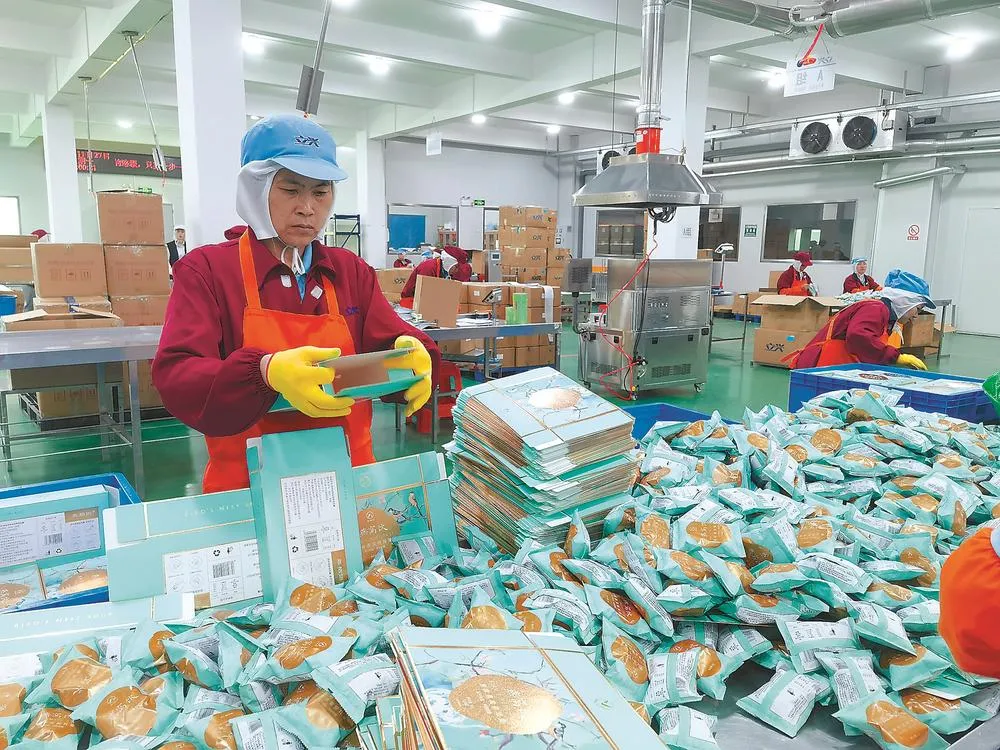
Inside the freeze-drying workshop of Fujian Lixing Food Co., Ltd., fresh white fungus tremella flowers float along the cleaning line like blooming white lotuses. After undergoing an 18-step process—including stewing, freshness-locking, freeze-drying, and packaging—the instant freeze-dried white fungus soup is ready. Infused with hot water for about 3 minutes, it transforms into a thick, nourishing bowl of wolfberry and white fungus soup.
"After the stewed white fungus is quick-frozen at -40°C, it is sent to a vacuum drying chamber where the ice sublimates directly into gas, dehydrating the material. Food processed through freeze-drying is not only portable and hygienic but also retains 90% of its original nutritional value and flavor." —— Chen Gaofei, Executive Deputy General Manager of Lixing Food
Currently, freeze-dried foods are gaining immense popularity in the consumer market. "A single cup of freeze-dried white fungus soup retails for 8 RMB. Compared to primary white fungus products, its added value has increased about 30 times," Chen Gaofei explained. This product line has become one of the company's star items, with sales steadily rising. Lixing has also launched upgraded products like rock sugar pear, probiotic, and bird's nest variations, securing a solid foothold in the niche freeze-dried white fungus market.
Technological innovation unlocks endless possibilities for diversified fungi utilization. Tongfa Food Co., Ltd. not only manufactures canned mushrooms but also upcycles discarded mushroom pre-cooking liquid into condiments like mushroom soy sauce and mushroom MSG. Meanwhile, Haishan Group has partnered with Pien Tze Huang to develop button mushroom polysaccharide tablets, further driving up the value of primary produce.
II. Edible Fungi Transformed into Bonsai and Classroom Tools
Facing a sluggish market for medicinal Ganoderma (Lingzhi) where prices have dropped to around 80 RMB per kilogram, the team at Tianzhen Industrial Co., Ltd. urgently sought a breakthrough. They set their sights on the edible fungi bonsai sector, adopting the strategy to "grow premium Ganoderma to sell as flowers."
Cultivating gorgeous, flower-like Ganoderma requires precise control over growth variables such as temperature, humidity, lighting, carbon dioxide, and substrate materials. After years of exploration, the team mastered a stable, year-round cultivation technique for bonsai Ganoderma—a pioneer achievement in China. This aesthetic upgrade has significantly boosted market value: while a standard edible Ganoderma spawn kit sells at an ex-factory price of 2 to 3 RMB, a bonsai kit goes for around 13 RMB. Regular bonsai retail for 20 to 40 RMB, making them highly affordable, whereas uniquely styled high-end Ganoderma bonsai can fetch anywhere from hundreds to thousands of RMB per pot.
Beyond the home decor market, Zhangzhou's innovative designs have turned edible fungi into interactive classroom tools. Zhangzhou Chengfa Agricultural Development Co., Ltd. collaborated with scientific research teams to optimize spawn formulas and select premium varieties (such as abalone mushrooms, golden oyster mushrooms, and pink oyster mushrooms) that children can easily grow at home.
💡 Key Highlights of Innovative Bonsai Spawn Kits:
- Rapid Growth: The very first flush can yield up to 300 grams of fresh mushrooms.
- User-Friendly Cultivation: Children only need to mist the kit according to the manual to harvest fresh edible mushrooms indoors within 7 to 10 days.
- Booming Market Demand: The company's Douyin (TikTok) flagship store, "Wukong Xiaojiang Mushroom Garden," has already surpassed 70,000 orders, with parents enthusiastically sharing their experiences of growing, cooking, and enjoying mushrooms with their children.
III. Empowering Farmers for Collective Prosperity
In Tianliao Village, Tianbao Town, Xiangcheng District, container-style "Mobile Smart Mushroom Houses" have become a prominent fixture. Stepping inside, one is greeted by a refreshing cool breeze and the distinct aroma of fresh mushrooms, where clusters of abalone mushrooms thrive beautifully on green shelves.
Mushroom farmer He Weijie manages his smart mushroom house via a control panel. With just a few taps, he can adjust parameters like temperature, humidity, and lighting. "Once we set the parameters, the smart mushroom house automatically adapts to external weather changes. It saves us so much labor—we no longer have to wake up in the middle of the night to check on the mushrooms!" He Weijie said. A few years ago, he returned to his hometown and leased four mobile smart mushroom houses from Fujian Yunjia'an Biotechnology Co., Ltd. Today, he and his wife manage these houses right at their doorstep, earning an annual income of 280,000 to 300,000 RMB.
| Metric |
Traditional Self-Made Spawn Kits |
Premium Corporate Spawn + Smart Mushroom House |
| Fruiting Time |
60 Days |
6 to 7 Days (90% Reduction) |
| Overall Yield |
Baseline |
Increased by 20% |
| Premium-Grade Yield |
Baseline |
Increased by 30% |
Chen Guoping, station master of the Zhangzhou Comprehensive Experimental and Extension Station of the Fujian Modern Agricultural Edible Fungi Industrial Technology System, noted that mobile smart mushroom houses successfully bypass land-use restrictions, maximize space utilization, and effectively activate rural "idle time, idle land, and idle labor." Riding on the waves of China's Central No. 1 Document encouraging the development of the "courtyard economy," these mobile smart mushroom houses are turning tiny household plots into profitable gardens, injecting powerful new energy into rural revitalization.
创新博览会LOGO.png)
.webp)


创新博览会LOGO-white.png)