This is a key technical decision in mushroom cultivation. As a professional organization focusing on the development of the edible fungi industry, the Edible Fungi and Products Branch of the China Chamber of Commerce for Import and Export of Foodstuffs, Native Produce and Animal By-Products is committed to delivering cutting-edge technical information to the industry. This article breaks down the core differences between the two types of peat to help growers optimize their cultivation plans.
About the Edible Fungi and Products Branch
Affiliated to the China Chamber of Commerce for Import and Export of Foodstuffs, Native Produce and Animal By-Products (a directly managed institution under the Ministry of Commerce), the Edible Fungi and Products Branch is dedicated to serving the national edible fungi import and export trade. Established in 2002, it gathers over 100 key enterprises in production, processing, and distribution, promoting standardized industry development. The parent chamber, China’s largest agricultural product industry organization, serves over 6,000 member enterprises, coordinating agricultural import-export and safeguarding rights.
Black Peat: An Ancient and Stable Choice
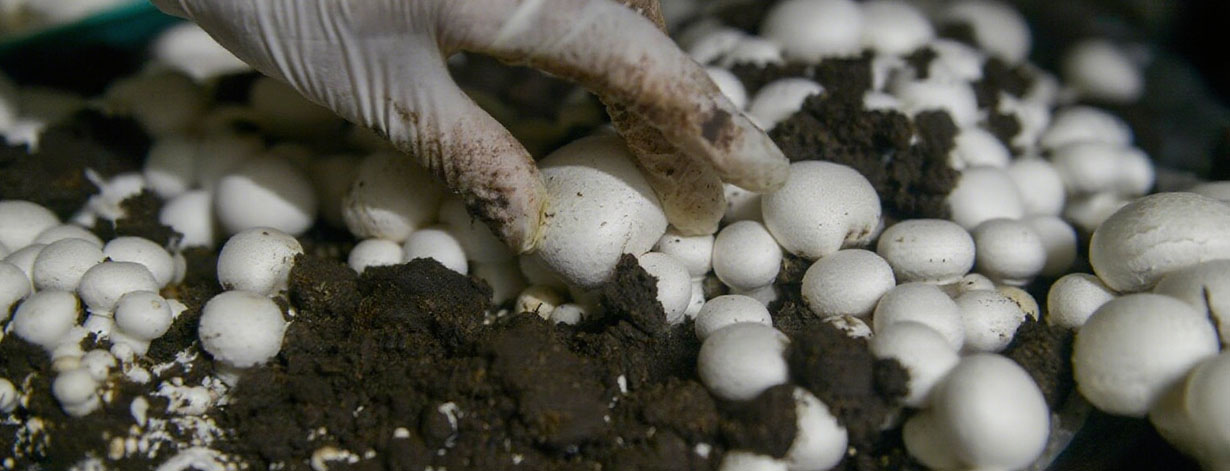
Formed about 10,000 years ago, black peat is mainly harvested in the northern hemisphere and is a traditional material for mushroom cultivation. It is heavy, moist to the touch, and has a firm structure—when kneaded into a ball and thrown against a wall, it sticks.
- Water Properties: Absorbs water slowly but retains it extremely well. After moistening, its surface initially shines, then dulls after 24 hours, a sign of slow water absorption and release through its fine capillary pores, providing a consistently moist environment for mycelium.
- Impact on Casing Soil: Cover soil consists of coarse soil clumps 2-4 cm thick with air trapped between particles, forming a high (6-7 cm per cubic meter) and breathable cover soil layer. Settlement during tillage is minimal, ensuring good aeration.
- Cultivation Management: More water can be applied before use and at the start of cultivation. After cooling, little to no water is added until harvest. Watering resumes when mushrooms reach ~1 cm and compost temperature rises; for white mushrooms, often not until after the first flush.
White Peat: Young but Requires Meticulous Care
Formed only ~5,000 years ago, white peat is less decomposed, dry to the touch, and crumbles easily when kneaded into a ball.
- Water Properties: Absorbs water quickly but releases it rapidly, making it poor for long-term moisture retention—more commonly used in horticultural potting soil.
- Impact on Casing Soil: Composed of fine particles with no coarse clods, resulting in a dense, less structured layer that is thinner and prone to compaction.
- Cultivation Management: Requires watering every other day even after cooling; otherwise, it dries out quickly. Ventilation and mycelium growth management differ significantly from black peat-based casing soil.
Cultivation Challenges and Suitable Scenarios
Limitations of White Peat: With high-quality compost and well-controlled climate, white peat often becomes a bottleneck—pinning is harder to manage, and sustained 5-6 day harvests per flush are nearly impossible (feasible with black peat).
- Advantages of White Peat: When compost quality is inconsistent or mycelium growth is poor, its light texture eases mycelium penetration, serving as a transitional option.
- Transition Advice: Switching from white to black peat should be gradual—start with 20% black peat mixed with white peat. If effective (better yield/quality), increase to 40%, provided compost quality is stable.
- China Mushroom Days: Platform for Tech Exchange & Business
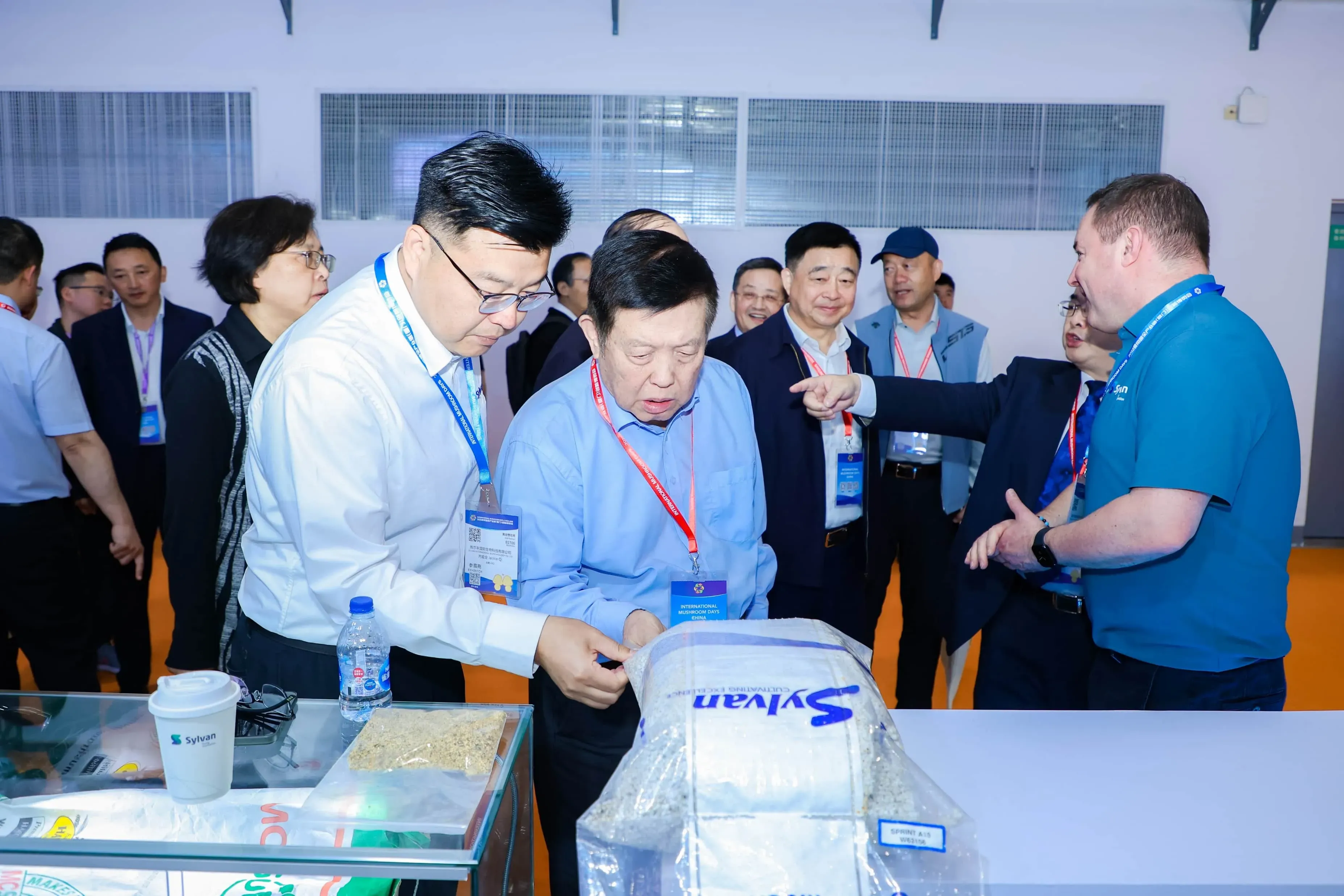
Hosted by the Edible Fungi and Products Branch, China Mushroom Days is a core exhibition for the entire edible fungi industry, held annually in Xiamen, Fujian. Covering full-chain products (e.g., peat casing soil, strains, equipment), it features "Intelligent Innovation Zone" and "Industry Revitalization Zone", gathering global suppliers and buyers.
Here, growers can connect with casing soil manufacturers for customized formulas (e.g., black/white peat ratios), negotiate OEM/private label cooperation, and attend forums to exchange cultivation expertise, driving industry upgrading.
Mushroom cultivation, like learning to walk, requires trial and error. In the long run, using black peat-based casing soil appropriately improves yield and quality. For technical support or supplier connection, leverage platforms like China Mushroom Days to explore optimization plans with peers.
创新博览会LOGO.png)

.webp)


创新博览会LOGO-white.png)