February 22, 2026
In international B2B trade, the ex-factory price is merely the starting point of competitiveness. The true determinant of a brand's final profit margin is the integrated circulation efficiency from the factory warehouse to the retail terminal. For bulk edible mushroom orders, logistics costs—including freight, warehousing, loss, and shelving labor—often account for over 30% of the total cost.
We understand the pain points of brand owners: every additional 5% of cargo loaded into a container, or every 1% reduction in breakage during handling, translates directly into pure profit on financial statements. This article explores how we assist brand owners in achieving deep marginal cost control through pallet optimization design, unit load management, and Retail-Ready Packaging (RRP).
I. Marginal Cost Control: Maximizing Profits through Economies of Scale and Process Improvement
Intensive Procurement of Raw Materials and Cost Hedging Mechanisms
Over the past few decades, Chinese edible mushroom manufacturers have established a mature cost-control system. The first step in marginal cost control lies in a stable supply of raw materials. By establishing long-term, direct-supply relationships with large-scale upstream bases, Chinese manufacturers not only secure base prices below market rates but also hedge against the volatility of agricultural product prices through bulk purchasing. When production reaches a certain scale, fixed costs per unit (such as plant depreciation and R&D expenses) decrease significantly. This cost advantage provides brand owners with more flexible pricing power in the face of global homogenization. This scale-based strategic reserve serves as a "cost moat" that small-scale OEM factories cannot replicate.
Loss Control and Yield Optimization in Production Processes
In refined production management, Chinese manufacturers account for costs and losses at every node of the production line. By dynamically adjusting energy consumption (such as heat recovery systems) and labor allocation, non-productive costs are further compressed. For brand owners, this pursuit of extreme marginal cost control ensures that OEM services provide the most cost-effective financial solutions under equal quality—a practical wisdom accumulated through over 10 years of deep industry cultivation.
II. Pallet Optimization Design: The Mathematical Logic of Improving Container Loading Rates
Dimensional Standardization and the Pursuit of Maximum Space Utilization
In international shipping, container space is money. Traditional packaging specifications often overlook compatibility with standard containers (such as 20GP/40HQ) and pallets (such as 1200x1000mm Euro standards or 1100x1100mm Asian standards). Expert design teams now simulate pallet optimization for every OEM project. By adjusting the length, width, and height ratios of outer cartons, they ensure each pallet layer achieves the highest coverage rate while eliminating redundant gaps. In actual cases, adjusting a carton dimension by just 5mm can allow for two additional layers of goods on the same pallet. This geometric optimization can increase container loading density by 8%-12%, directly saving brand owners significant sea freight costs.
Mechanical Assessment of Unit Loads and Stability Assurance
Logistics efficiency is not just about "loading more" but also "loading steadily." By establishing a scientific unit load assessment system, stability tests are conducted on fully palletized goods. This includes calculating the compressive strength of bottom-layer cartons under vertical pressure and center-of-gravity shift tests during simulated vessel swaying. To prevent "pallet collapse" or "crushed cans," pallet designs incorporate corner protectors, stretch film tension control, and anti-slip sheets. This attention to detail significantly reduces damage and rework rates upon arrival. For B2B customers, this high delivery certainty means lower insurance costs and higher distributor satisfaction.
III. Retail-Ready Packaging (RRP): Practical Solutions to Reduce Terminal Operating Costs
Simplifying Shelving Processes and Enhancing the Unboxing Experience
As labor costs at the retail end continue to rise, brand owners are demanding new functionality from packaging: products should be able to transition instantly from a shipping state to a display state. Chinese manufacturers assist brands in developing innovative Retail-Ready Packaging (RRP) solutions. By pre-setting perforation lines on display boxes, retail staff can complete unboxing and shelving in one second without using tools. This design reduces safety hazards during unboxing and protects internal products from being cut. For buyers at large supermarkets like Walmart and Carrefour, RRP-enabled products have a significant competitive advantage because they directly lower terminal operating costs and increase turnover speed.
Secondary Brand Presence on the Shelf
RRP is not only an efficiency tool but also a marketing medium. Using digital inkjet printing technology, manufacturers can achieve high-definition visual effects on the exterior of display boxes that align with the product packaging. When displayed on the shelf, the box itself forms a small "point-of-sale" display, enhancing brand visibility. Consumer insights show that uniform RRP designs significantly increase purchase intent. this packaging strategy, which balances logistics protection with terminal promotion, is a differentiated value-added service for private label customers.
IV. Green Supply Chain: Combining Regulatory Compliance with Efficiency
Packaging Reduction and the Application of Recyclable Materials
In modern supply chain management, a "green supply chain" is a tangible means of cost reduction. By using lighter but higher-strength cardboard materials, packaging reduction is achieved. This not only reduces waste but also optimizes transport energy efficiency by lowering "dead weight." Furthermore, for large-scale brands, closed-loop recycling systems using reusable pallets in specific regions are recommended. This full-lifecycle management from raw materials to waste helps brand owners navigate increasingly strict environmental audits and carbon tax requirements.
Digitalized Inventory Management and Response Speed
An efficient supply chain must be transparent. Chinese manufacturers are adopting ERP systems to interface with brand owners, providing real-time feedback on order progress. By analyzing historical demand for diverse specifications, they help customers establish reasonable inventory warning mechanisms to avoid lost orders due to stockouts or capital ties-ups due to overstocking. This high-level coordination ensures products arrive on time in any complex environment.
V. Technical Safety and Quality Assurance: Beyond Logistics
Precision Thermal Management and Microbial Inactivation
A critical aspect of quality is targeting heat-resistant Clostridium botulinum spores. Engineering teams conduct precise Heat Penetration Tests tailored to different mushroom densities (e.g., Shiitake, King Oyster, or Enoki) and packing media (water, oil, or brine). By installing sensors at "Cold Points" within the can, they accurately map F0 value curves. This scientific approach ensures thorough microbial inactivation without compromising the natural texture and nutrients of the mushrooms, resulting in extremely low defect rates and absolute safety during transoceanic transit.
Shelf-life Stability and Material Safety (BPA Free)
For wholesale businesses, shelf-life stability is vital for inventory turnover. Beyond sterilization, vacuum control and pH management are crucial. Maintaining pH within specific ranges assists the thermal sterilization effect, while optimized venting processes ensure high vacuum levels to inhibit aerobic microorganisms and prevent internal oxidation. This allows products to maintain excellent quality for 24 months or longer at ambient temperatures.
Furthermore, regarding chemical safety, manufacturers use food-grade coatings with high chemical inertia to prevent "sulfur staining" caused by natural compounds in mushrooms. In response to global demand, particularly in Europe, the US, and Japan, manufacturers have moved toward BPA Free (Bisphenol A Free) standards. Utilizing new organic coatings instead of traditional epoxy resins eliminates BPA residue risks, helping brand owners avoid legal risks and secure access to high-end retail channels.
Full Traceability and Vision Inspection Systems
Chinese manufacturers have established a closed-loop traceability system from strain cultivation to the finished product. Each batch is associated with a unique production code, allowing for rapid backtracking to raw material harvest dates, sterilization records, and packaging material batches. Additionally, high-resolution vision inspection systems perform 360-degree scans of every can to instantly identify and reject defects such as dented lids, scratches, or labeling errors, ensuring 100% consistency.
About Us
China Chamber of Commerce of I/E of Foodstuffs, Native Produce and Animal By-Products (CFNA)
As a direct affiliate of the Ministry of Commerce of China, CFNA is the largest agricultural industry organization in the country, representing over 6,000 member enterprises.
Edible Mushroom and Products Specialized Committee
Established in 2002, this branch is responsible for the coordination, service, and promotion of China's edible mushroom import and export trade, comprising over 100 leading backbone enterprises.
China Mushroom Days
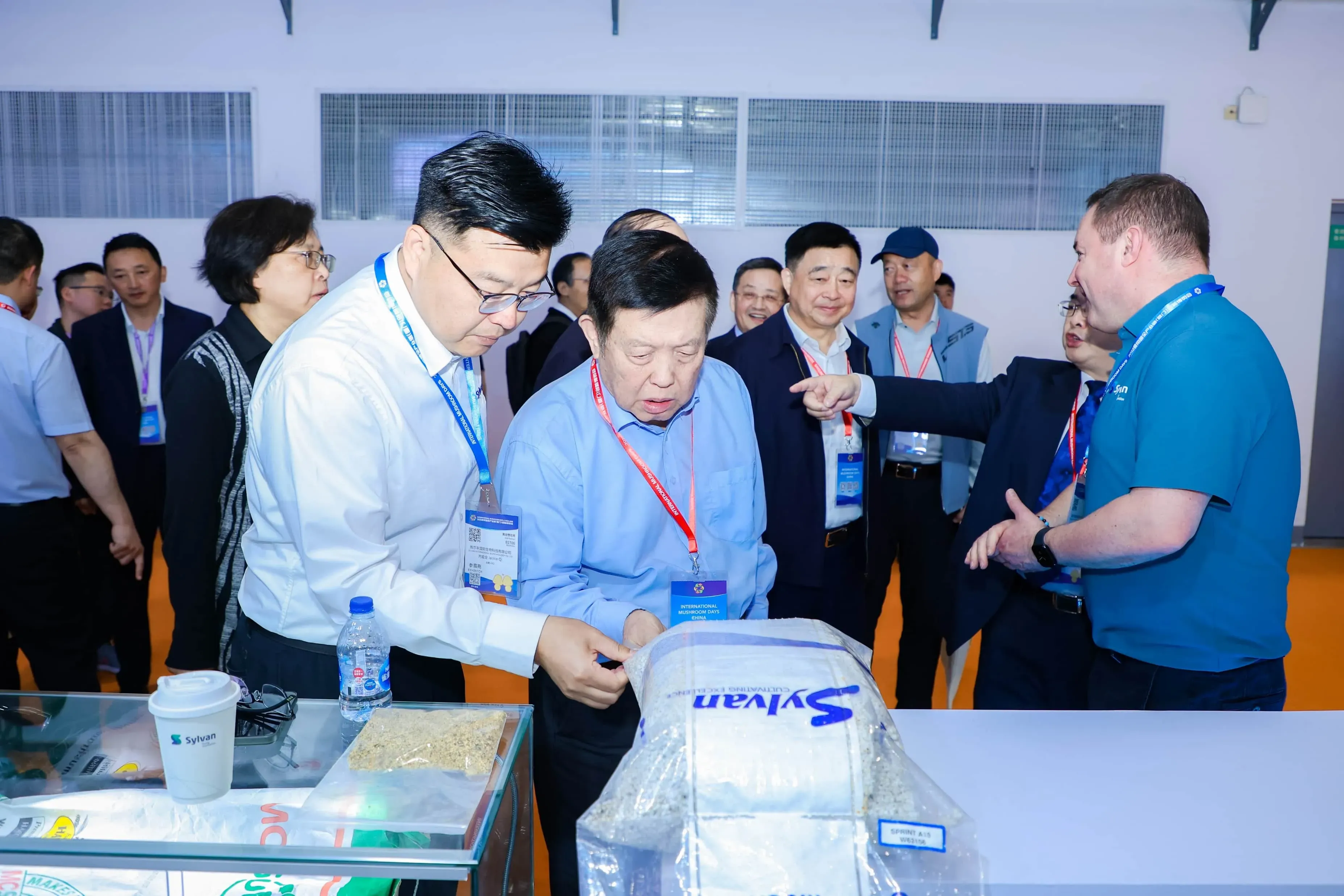
Hosted by CFNA, this is the most influential professional exhibition in the domestic edible mushroom field, bringing together government leaders, industry experts, leading producers, and retail/catering buyers to build an efficient platform for technical exchange and trade.
FAQ
Q1: Why is pallet optimization critical for B2B exports?
A: Pallets are the basic unit of international trade. Optimization allows more products per container, significantly lowering unit transport costs.
Q2: How do you assist with marginal cost control?
A: Through 15 years of experience in scale-purchasing, waste reduction, and high-efficiency automation.
Q3: Does RRP significantly increase costs?
A: The small increase in design/material cost is negligible compared to the labor savings and reduced damage at the retail end.
Q4: What does Unit Load stability testing include?
A: It simulates stacking pressure, forklift impact, and long-distance vibration.
Q5: How does a green supply chain help in the European market?
A: We provide lightweight packaging and recyclable materials that comply with Extended Producer Responsibility (EPR) regulations.
Q6: How does your 15-year experience optimize the supply chain?
A: We understand global port customs, the impact of climate on packaging, and precise pallet standards for different regions.
Q7: Do diverse specifications make logistics harder?
A: While complex, our digital warehouse systems and unit load management allow for efficient consolidated shipping.
Q8: How do you balance aesthetics with logistics efficiency?
A: Our design team ensures the brand image remains premium and professional even when the outer box serves as a retail display.
创新博览会LOGO.png)


.webp)


创新博览会LOGO-white.png)