[Core Highlights]: This article systematically reviews the keynote report on Poria strain technology presented by Dr. Caihong Dong, a researcher at the Institute of Microbiology, Chinese Academy of Sciences, during the 2026 Dabieshan Poria Industrial Development Conference. The article reveals deep-seated concerns facing the Poria industry: the major cultivated strains (such as 5.78, Xiangjing 28, Minling A5, and Wanling No.1) are highly homologous, posing a risk of "inbreeding," while wild Poria resources are increasingly scarce. It detailedly introduces breeding bottlenecks, four major breeding methods, molecular marker-assisted systems, strain rejuvenation techniques, and regulatory requirements for graded strain production.
Industry Status: Highly Homologous Cultivated Strains and Scarce Wild Resources
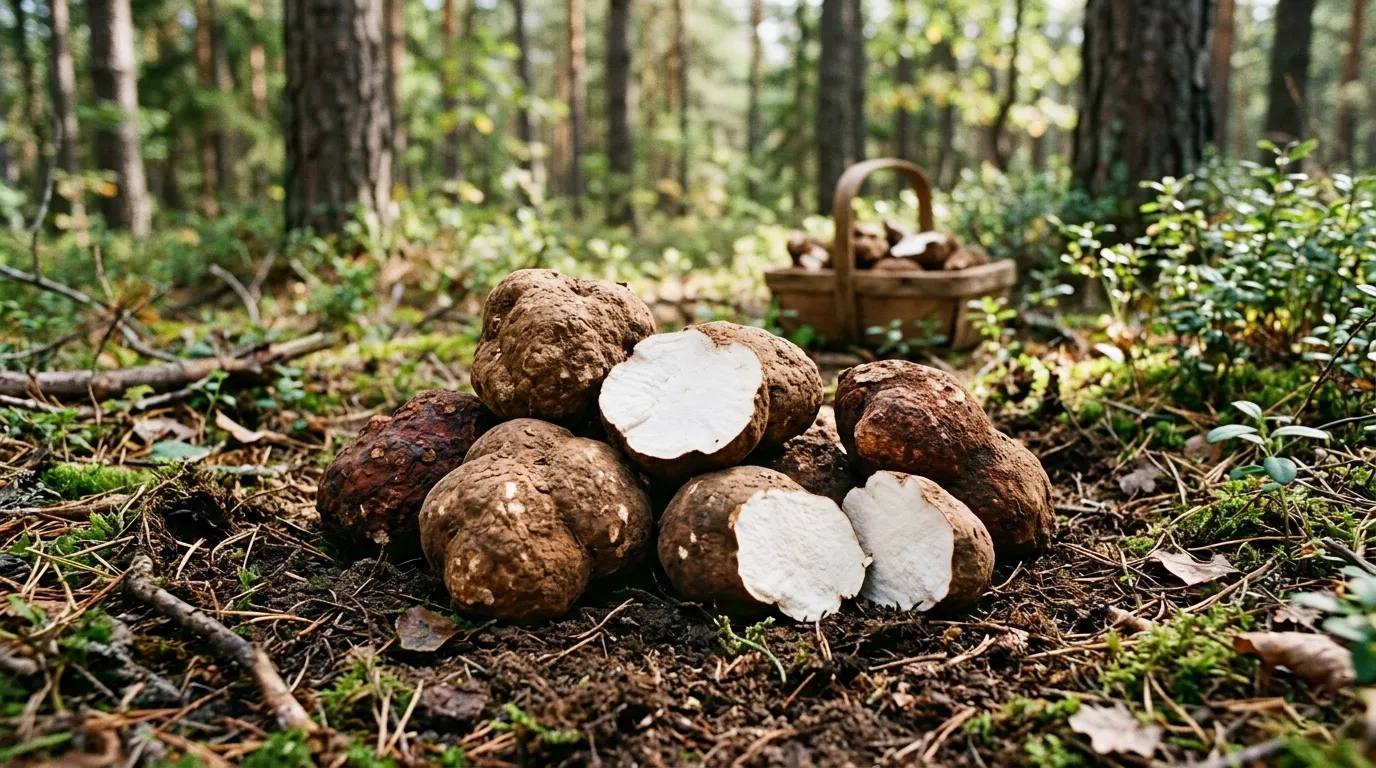
Currently, the dominant cultivated strain of Poria in China is 5.78, alongside other main cultivated strains such as Xiangjing 28, Fujian Minling A5, and Anhui Wanling No.1. Genetic diversity analysis indicates that these cultivated strains are closely related, demonstrating a high state of genetic homogeneity.
This reveals a grim reality: cultivated Poria strains have long been in a state of "inbreeding." Although wild strains exhibit significant genetic differences and are vital for breaking genetic bottlenecks to achieve hybrid vigor, wild Poria resources are becoming increasingly scarce, necessitating urgent protection and utilization.
Breaking Technological Bottlenecks: Four Breeding Methods and IPR Protection
Poria breeding has long faced technical bottlenecks, such as difficulties in fruiting body induction and a lack of clamp connections in mycelia, which makes hybrid identification difficult and leads to severe strain homogenization. Currently, targeting high yield and quality while balancing stress resistance (heat, drought, waterlogging) and adaptability, four major breeding methods are employed:
- Empirical Breeding: A traditional yet effective approach involving wild resource collection, pure culture isolation, and trait screening (e.g., strains 5.78 and Wanling No.1).
- Mutation Breeding: Utilizing physical or chemical factors to induce variations, yielding achievements like Chuanjie No.1 and Fujian Minling A5; Xiangjing 28 also underwent space mutation.
- Protoplast Fusion Breeding: Capable of overcoming reproductive isolation, mainly used for protoplast rejuvenation in Poria.
- Cross Breeding: Exploiting hybrid vigor for gene recombination (e.g., strain WZ-1). The research team has established a molecular marker-assisted cross-breeding system for Poria, overcoming the challenge of hard-to-observe clamp connections.
Furthermore, to prevent the chaotic practice of unauthorized propagation and arbitrary renaming ("same strain, different names"), the team established a Poria MNP marker database. Strains with over 99.95% similarity are judged identical, providing technical support for the intellectual property protection of Poria strains.
Addressing Industry Pain Points: Strain Degeneration and Four Rejuvenation Techniques
Strain degeneration manifests as sparse and yellowish mycelia, weak growth vigor, declined sclerotial formation capacity, and unstable yield, which is currently the biggest pain point in the Poria industry. To address this issue, the report proposed four effective rejuvenation methods:
1. Re-isolation of cultivated sclerotia
2. Slant tip purification
3. Protoplast regeneration
4. Re-isolation after inoculating back to pine wood
Regulating Propagation: Strict Enforcement of Laws and Expansion Ratios
The "Measures for the Administration of Edible Mushroom Strains" issued by the Ministry of Agriculture and Rural Affairs clarifies that strains are divided into mother strains (Level 1), stock strains (Level 2), and cultivated strains (Level 3). Production and operation licenses for mother and stock strains are verified by local competent authorities and issued by provincial agricultural departments, then filed with the Ministry of Agriculture and Rural Affairs. Article 20 strictly stipulates: Strains must be produced according to their levels; a lower level can only be produced from a higher level, and cultivated strains must not be re-propagated.
Disorderly propagation is a major source of production risks. Regarding expansion ratios, national standards provide clear quantitative restrictions:
| Regulation / Standard |
Expansion Limit per Mother Strain |
Expansion Limit per Stock Strain |
| Rules for Edible Mushroom Strain Production |
≤ 6 bottles of stock strains |
≤ 50 bags of cultivated strains |
| Poria Strains (National Standard) |
≤ 6 bottles/bags of stock strains |
≤ 35 bottles/bags of cultivated strains |
Dr. Caihong Dong concluded that strain breeding and rejuvenation are core technologies for the high-quality development of the Poria industry. Future efforts should deepen basic research and accelerate the transformation of modern biotechnologies like gene editing to facilitate industrial upgrading.
创新博览会LOGO.png)

.webp)


创新博览会LOGO-white.png)