Industry News
Science Garden
In the current context of growing environmental awareness, the problems of high energy consumption, high pollution, and long degradation cycles of traditional materials have become increasingly prominent. For example, the energy consumption for plastic production reaches 80 - 100MJ/kg, and it takes 100 - 500 years to degrade. In sharp contrast, mycelium materials have emerged. They have low energy consumption, fast degradation, and their raw materials are derived from agricultural waste. Now, they have already shown their potential in the fashion field, and their broader application prospects are worthy of our in - depth exploration. Today, we will provide a relatively comprehensive overview of mycelium materials.
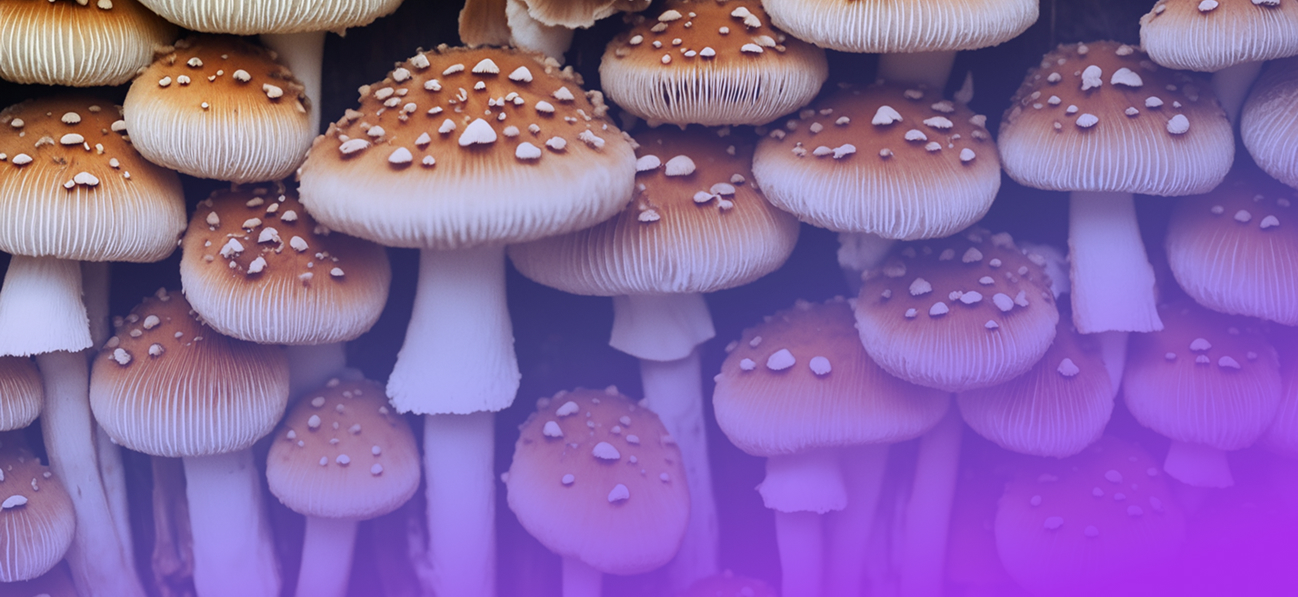
Basic Concepts and Characteristics of Mycelium Materials
1.1 Biological Definition of Mycelium
Mycelium is the vegetative growth part of fungi, composed of countless branched hyphae. Hyphae secrete enzymes to decompose organic substrates (such as lignin and cellulose), absorb nutrients, and form a network structure. This natural growth characteristic makes it a programmable biomaterial.
1.2 Core Characteristics of Mycelium Materials
Degradability: It can be completely decomposed in 3 - 6 months in the natural environment, much faster than plastic (which takes hundreds of years).
Lightweight and High - Strength: The compressive strength reaches 0.5 MPa, and the density is only 0.1 - 0.3 g/cm³ (close to foamed plastics).
Fire - Resistance and Heat - Insulation: Some mycelium composites can withstand high temperatures of 300℃ after modification.
Plasticity: It can be molded into any shape through mold design to adapt to diverse application scenarios.
1.3 Comparative Advantages over Traditional Materials
CharacteristicsMycelium MaterialsPlasticsWoodProduction Energy Consumption (MJ/kg)10 - 1580 - 10020 - 30Carbon Emissions (kg CO₂e/kg)0.5 - 1.23.5 - 6.01.0 - 1.5Degradation Cycle3 - 6 months100 - 500 years10 - 20 years (natural decomposition)Raw Material SourceAgricultural WastePetroleumForest
Production Processes and Technological Advances of Mycelium Materials
2.1 Core Production Processes
Substrate Pretreatment: Agricultural waste such as straw and wood chips are crushed and sterilized (by steam treatment or γ - ray irradiation).
Inoculation: Select white - rot fungi (such as Pleurotus ostreatus strains) or brown - rot fungi, with an inoculation amount of 5 - 10% (w/w).
Mycelium Cultivation: Cultivate at 25 - 30℃ and a humidity of 80 - 90% for 5 - 10 days to form a dense mycelium network.
Post - Treatment: Hot - pressing and shaping (70 - 90℃), drying (moisture content < 10%), or surface coating (water - proof, antibacterial).
2.2 Directions of Technological Innovation
Gene - Editing Technology: The CRISPR - Cas9 technology is used to enhance the enzyme - producing ability of mycelium, shortening the growth cycle by 30% (achievement of Bolt Threads in the United States).
3D - Printed Mycelium: Mix the mycelium suspension with nanocellulose and directly print complex structures (breakthrough of Utrecht University in the Netherlands).
Intelligent Fermentation System: AI real - time regulates the CO₂ concentration and temperature to improve the material uniformity (patented technology of the German BioFabrication Lab).
2.3 Challenges in Large - Scale Production
Degeneration of Strains: Continuous sub - culturing leads to a decrease in growth rate, and the mother strain needs to be updated every 6 months.
Cost Control: Currently, the production cost of mycelium materials per cubic meter is 200 - 300, and the goal is to reduce it to 50 (comparable to EPS foam).
Application Fields and Case Analyses of Mycelium Materials
3.1 Packaging Materials
Market Status: The global mycelium packaging market size was $230 million in 2023, with an annual growth rate of 45%.
Representative Cases:
Ecovative Design: Cooperated with IKEA to produce mycelium cushioning materials, replacing EPS foam and reducing carbon emissions by 90%.
Magical Mushroom Company: Provided computer packaging for Dell, with better impact - resistance performance than traditional plastics.
3.2 Building Materials
Performance Parameters:
Thermal Conductivity: 0.05 W/m·K (close to polyurethane foam).
Bending Strength: 2.5 MPa (suitable for non - load - bearing walls).
Innovative Applications:
MycoWorks: Developed mycelium - bamboo fiber composite panels for the temporary pavilions of the Dubai World Expo.
Biohm: Utilized mycelium to absorb construction waste (such as gypsum boards) to achieve "zero - waste" construction.
3.3 Textile and Leather Substitutes
Technological Breakthroughs:
Mylo (Bolt Threads): The tensile strength of mycelium leather reaches 20 MPa, equivalent to genuine leather, and has been purchased by Adidas and Lululemon.
MycoTEX (NEFFA): Seamless mycelium clothing reduces cutting waste and reduces production energy consumption by 70%.
3.4 Food and Medicine
Food Packaging: Edible mycelium films can extend the freshness - keeping period of fruits and vegetables by 50% (the Mycorena project in Sweden).
Biostructures: The porous structure of mycelium is used for cell culture to promote tissue regeneration (research by the Wyss Institute at Harvard University).
Market Status and Trend Analysis
4.1 Market Size and Growth
Global Market: The mycelium material market was valued at 850 million in 2023 and is expected to reach 4.8 billion in 2030 (CAGR of 28%).
Regional Distribution:
North America: 45% share, driven by policies (California's plastic - ban order) and active capital (financing of $320 million in 2022).
Europe: 30% share, with the EU's "Green New Deal" mandating the replacement of 50% of petrochemical plastics.
Asia - Pacific: 15% share, with China's "Dual - Carbon" goal promoting the inclusion of mycelium in the "Strategic Emerging Industries Catalogue".
4.2 Industrial Chain Map
Raw material suppliers (straw recyclers) → Strain R & D (synthetic biology companies) → Material production (Ecovative, etc.) → End - use applications (consumer brands, construction companies).
4.3 Competitive Landscape
Leading Enterprises:
Ecovative Design: With over 200 technical patents, it occupies 60% of the packaging market share.
MycoWorks: Collaborates with luxury brands (Hermès, Gucci), with a unit price of $1,000/㎡.
Start - up Companies:
Mogu (Italy): Focuses on acoustic materials, and the mycelium acoustic panels have a noise reduction coefficient of 0.85.
Mycotech (Indonesia): Produces low - cost building materials using palm waste, with a price 30% lower than that of wood.
Core Challenges and Solutions
5.1 Technical Bottlenecks
Insufficient Water Resistance: The water absorption rate of mycelium is 20 - 30%, and surface coating (such as beeswax modification) or composite hydrophobic materials (PLA lamination) are required.
Long Production Cycle: Traditional cultivation takes 7 - 10 days, and the cycle can be shortened to 3 days through liquid - state fermentation (technology of Mycorena in Sweden).
5.2 Obstacles to Scale - up
Shortage of Automated Equipment: Develop special mycelium molding machines (such as the continuous cultivation system of FabricNano in the Netherlands).
Lack of Standardization: Promote ASTM/ISO to formulate mycelium material testing standards (such as compressive strength, degradation rate).
5.3 Low Market Awareness
Consumer Education: Disseminate product advantages through social media (the MyceliumRevolution topic on TikTok has 200 million views).
B2B Cooperation: Jointly promote with brands such as IKEA and Nike to build industry trust.
5.4 Policy and Financial Support
Government Subsidies: The EU's "Horizon Europe" program has allocated 120 million euros to support mycelium research and development.
Carbon Tax Leverage: Impose a carbon tax of $50/ton on petrochemical materials, forcing enterprises to switch to mycelium alternatives.
Future Outlook (2024 - 2030)
6.1 Forecasts of Technological Breakthroughs
AI - Optimized Production: Machine learning predicts the best mycelium growth parameters, and the yield of qualified products is increased to 95%.
Synthetic Biology Revolution: Design "super - strains" that can simultaneously produce active ingredients (such as antibacterial agents) and structural materials.
6.2 Emerging Application Scenarios
Space Materials: NASA is testing mycelium building materials for lunar bases, using lunar soil for in - situ cultivation.
Electronic Waste Recycling: Mycelium can adsorb heavy metals (gold, copper) in circuit boards, with a recovery efficiency of 80%.
6.3 Market Expansion Strategies
Regional Penetration: Promote low - cost mycelium building materials in Southeast Asia and Africa to replace asbestos and plastic boards.
Circular Economy Model: Establish a "Mycelium Recycling Alliance" to regenerate waste materials into fertilizers or energy.
6.4 Investment Hotspots
Upstream Strain Banks: Enterprises with patented strains have a valuation premium of 3 - 5 times.
Vertically Integrated Platforms: Full - chain service providers from raw material recycling to terminal sales (such as Ecovative's "Grow It Yourself" kit).
Industry Strategies
7.1 Enterprise Action Guidelines
Differentiated Positioning: Small and medium - sized enterprises focus on niche markets (such as mycelium automotive interiors) to avoid direct competition with giants.
Technical Cooperation: Co - build laboratories with universities (such as the MIT Media Lab) to share IP and R & D resources.
7.2 Policy Advocacy
Promote Standard Setting: Jointly draft the "Classification and Testing Specifications for Mycelium Materials" with industry organizations.
Carbon Credit Incentives: Incorporate mycelium production into the carbon trading system, and each ton of emission reduction can be exchanged for $50 in revenue.
7.3 Consumer Interaction
Transparent Marketing: Display the material life cycle through blockchain traceability (such as the whole process from straw to packaging).
Experiential Sales: Open mycelium DIY workshops to enhance user participation and brand loyalty.
Conclusion
Mycelium materials are moving from the laboratory to the global market. Their cross - field application potential and sustainable value make them a "new species" in the material revolution. Facing multiple challenges in technology, cost, and perception, the industry needs to use innovation as the engine and cooperation as the link to build a complete ecosystem from the farm to the factory, from policy to consumption. In the next decade, mycelium will not only reshape the packaging, construction, and textile industries but may also become one of the key solutions for humanity to address the climate crisis.
创新博览会LOGO.png)

.webp)

创新博览会LOGO-white.png)