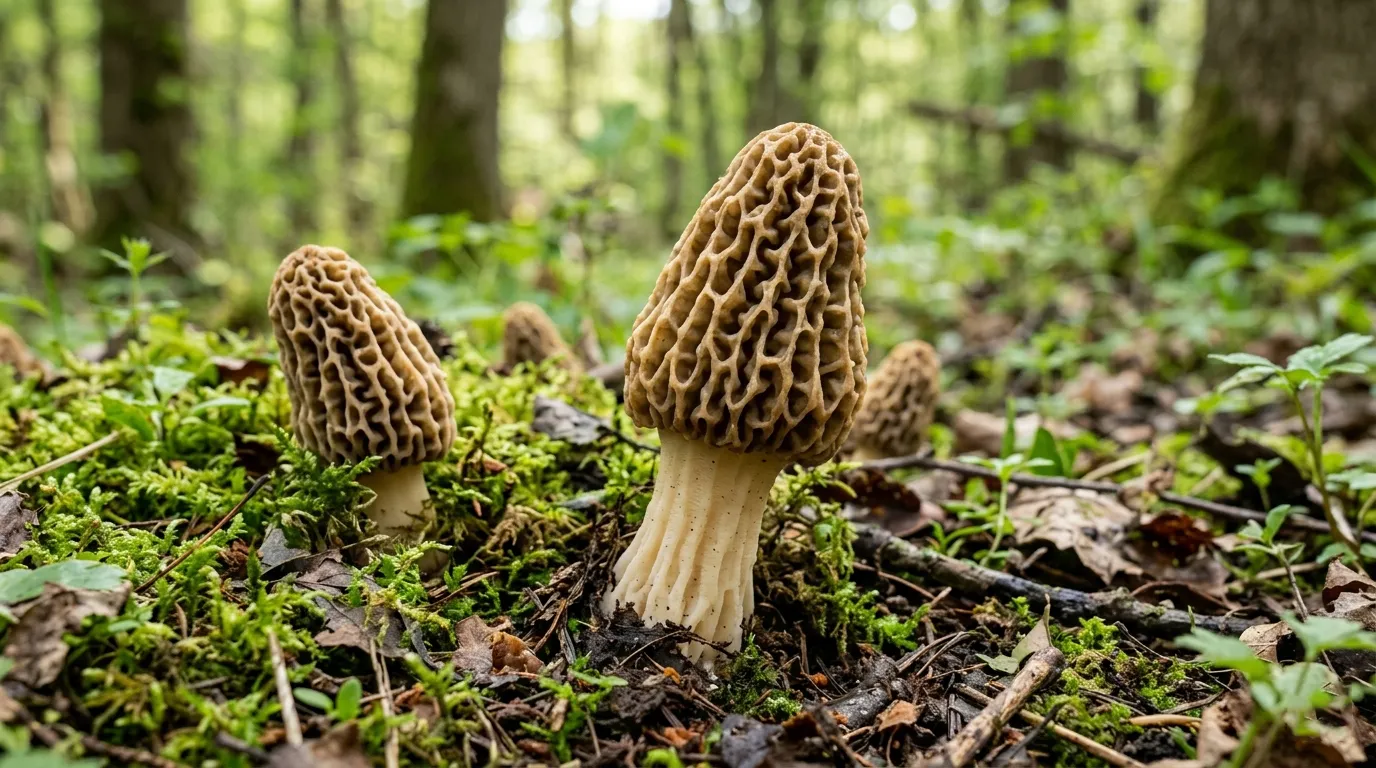
In recent years, with the continuous expansion of the high-value edible mushroom market, the morel (Morchella) has become one of the key varieties of interest in China and the global edible mushroom industry due to its unique flavor, high nutritional value, and significant economic benefits. However, during the rapid expansion of the industry, issues such as insufficient strain stability, poor regional adaptability, and pronounced yield fluctuations have gradually emerged as key bottlenecks restricting large-scale development.
Recently, systematic research centered on the genetic mechanisms, strain breeding, and cultivation applications of morels has provided new technical pathways for the industry. This research is driving the industry's transition from an experience-driven model toward scientific breeding and precision management.
Breaking Traditional Conceptions: Multinucleate Heterokaryosis and Single-Spore Selection
Studies reveal that morels possess crucial genetic characteristics that distinguish them from traditional edible mushrooms. Their ascospores exhibit a multinucleate heterokaryotic structure with a high capacity for single-spore fruiting, demonstrating a Category III primary homothallism genetic pattern. This implies that the traditional cross-breeding (hybridization) models widely used in the edible mushroom sector do not apply broadly to morels, prompting a reassessment of long-held breeding assumptions within the industry.
Based on this genetic mechanism, the research proposes that future development of new morel varieties should rely more heavily on the large-scale screening of single-spore strains rather than traditional hybridization paths. By establishing a single-spore isolation system, combined with continuous fruiting trials across multiple regions, successive years, and diverse cultivation models, elite resources with high-yield, high-quality, stress-resistant, and stable performances can be successfully selected from vast strain pools.
The research further points out that even when derived from the same species, distinct single-spore strains can still exhibit significant variations in yield levels, mushroom morphology, growth rates, and environmental adaptability. Therefore, establishing a "selecting the best of the best" strain screening mechanism through long-term field evaluation systems will become an essential foundation for future commercial production.
Adjusting Production Strategies: Mitigating Single-Strain Risks Through Multi-Strain Synergy
At the practical production level, the study proposes a highly pragmatic application strategy: avoiding the large-scale promotion of a single strain.
For a long time, some growers have tended to rely on a single dominant strain to expand their cultivation scale. However, practical production shows that climate change, variations in field management, and regional environmental factors often amplify the risks associated with a single strain. In contrast, deploying multiple superior strains, multi-regional layouts, and multi-model collaborative production is more conducive to reducing uncertainties and achieving stable, high-yield goals.
Concurrently, the research emphasizes that traditional observation metrics—such as sclerotia quantity, mycelial growth vigor, and conidia numbers—do not directly dictate final yields. The core variables affecting morel production efficiency remain concentrated on climatic conditions, soil environments, and refined cultivation management capabilities.
This series of research achievements not only provides new scientific backing for morel breeding theories but also outlines a clearer development trajectory for industrial practice: shifting from the pursuit of a single high-yielding variety toward building a sustainable production system characterized by multiple strains, multi-regional cultivation, and long-term verification.
As a vital platform connecting technology, markets, and industrial resources, the Edible Mushroom Whole Industry Chain (Xiamen) Innovation Expo will continue to closely monitor cutting-edge achievements in the field of morels and high-value edible mushrooms. By promoting scientific innovation, achievement transformation, and industrial synergy, the Expo aims to empower the global edible mushroom industry to step into a more efficient, stable, and sustainable future.
创新博览会LOGO.png)
.webp)


创新博览会LOGO-white.png)