Industry News
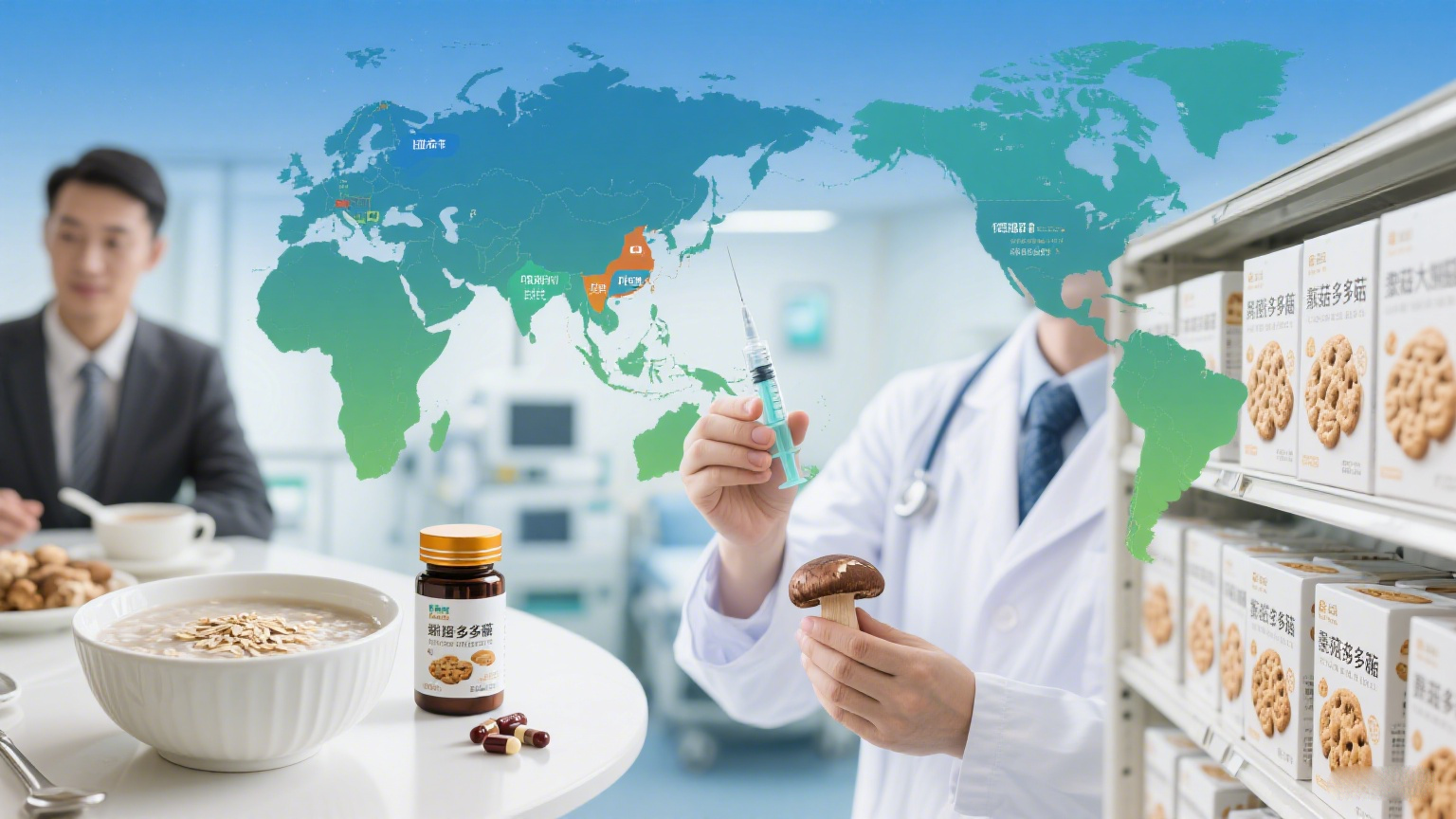
When reishi mushroom spore capsules appear on the breakfast tables of urban white-collar workers, when lentinan injections become part of cancer treatment protocols, and when hericium erinaceus biscuits turn into staple snacks for those nurturing their stomachs, edible fungi have long transcended their traditional role as ingredients to become key players in the wellness industry. These unique organisms, boasting both nutritional and medicinal value, are now shining in fields like preventive medicine, chronic disease management, and immune regulation, empowered by modern technology. From China's reishi-based wellness culture to Japan's lentinan-based pharmaceuticals, from functional mushroom products in Western markets to traditional medicinal fungi therapies in Southeast Asia, global practices are confirming one conclusion: edible fungi will emerge as core ingredients in the future health industry.
I. Dual Advantages of Nutrition and Efficacy: The Scientific Foundation for Wellness Applications
The rise of edible fungi in wellness stems primarily from their unique "medicinal-food homology" properties. Modern nutritional research reveals that these organisms concentrate rare nutritional combinations from nature—their protein content rivals meat while their amino acid profile matches human essential patterns; their dietary fiber content far exceeds ordinary vegetables, with soluble fibers like β-glucans exhibiting special physiological activity; their concentrations of B vitamins, vitamin D precursors (ergosterol), and trace elements like selenium and zinc make them natural nutritional supplements. More importantly, edible fungi contain multiple bioactive compounds rarely found in plant-based foods, forming their core competitive edge in wellness applications.
Among discovered active components, fungal polysaccharides stand out as "star molecules." Lentinan from shiitake mushrooms, ganoderma lucidum polysaccharides, and hericium erinaceus polysaccharides have been pharmacologically proven to regulate the human immune system by activating macrophages and promoting immunoglobulin production. Japanese researcher Kureha Takeo first discovered lentinan's antitumor activity in the 1960s; subsequent studies confirmed its ability to inhibit tumor cell proliferation and reduce chemotherapy side effects. This dual regulatory characteristic—enhancing immune function while preventing excessive immune responses—makes fungal polysaccharides ideal ingredients for immune-regulating products.
Triterpenoids represent another important active component, abundant in medicinal fungi like reishi and poria. These compounds demonstrate significant anti-inflammatory and antioxidant effects, with reishi triterpenes additionally inhibiting histamine release, showing potential therapeutic value for allergic diseases. A 2021 study in the Chinese Journal of Traditional Chinese Medicine revealed that reishi triterpenes can improve blood glucose and lipid markers in metabolic syndrome patients by modulating gut microbiota balance, offering new pathways for chronic disease management.
Additionally, components like adenosine (improving blood circulation), ergosterol (promoting calcium absorption), and polyphenols (antioxidants) collectively form the material basis for edible fungi's multidimensional wellness applications. This naturally occurring "composite efficacy system" gives them advantages in safety and synergistic effects compared to single synthetic compounds, perfectly aligning with modern consumers' pursuit of "natural wellness."
II. Diverse Application Scenarios: Full-Chain Coverage from Daily Health to Clinical Support
Edible fungi's wellness applications have formed a multi-level, all-scenario product matrix, demonstrating remarkable adaptability from meeting basic nutritional needs to addressing complex health issues—a breadth rare in the global health industry.
At basic health maintenance levels, edible fungi achieve universal coverage through functional foods. Japan's Ajinomoto launched "Mushroom Dashi Cubes," combining shiitake and enoki extracts with minerals to preserve umami while enhancing nutrition, with annual sales exceeding ¥1 billion. American brand Four Sigmatic's "Mushroom Coffee," blending reishi and cordyceps extracts with Arabica coffee, promotes "alertness without palpitations," becoming standard for Silicon Valley elites. In China, Jiangzhong Pharmaceutical's hericium erinaceus biscuits, positioned for "stomach nourishment," peaked at ¥1.5 billion in annual sales, evidencing consumer recognition of edible fungi functional foods. Such products make health maintenance simple through "daily intake" models.
Health management for specific populations represents another crucial application. For seniors' bone health issues, DuPont developed "Shiitake Vitamin D Fortifier," utilizing UV-converted ergosterol to create senior-friendly supplements. For subhealth sleep problems, Korea's Dongwon Group's "Cordyceps Militaris Oral Liquid," leveraging adenosine to improve sleep quality, holds 23% market share in Korean functional beverages. In diabetes management, the Shanghai Institute of Materia Medica's "Maitake Polysaccharide Capsules," shown clinically to reduce postprandial glucose spikes, have entered some hospital diabetes adjunct therapy protocols.
In clinical adjunct therapy, edible fungi extracts demonstrate unique value. In 1980, Japan's MHLW approved lentinan injections for gastric cancer adjunct therapy—the world's first approved edible fungi antitumor drug, shown to increase five-year survival rates by 12% in late-stage patients. China Pharmaceutical University's "Poria Cocos Polysaccharide Oral Liquid," proven to reduce liver damage during interventional肝癌 therapy, was included in China's 2022肝癌诊疗指南. For antibiotic-induced gut dysbiosis, European researchers found Saccharomyces boulardii (an edible fungus) effectively improves antibiotic-associated diarrhea, with Biocodex's preparation approved in 50+ countries.
Notably, edible fungi's skincare applications are emerging. Estée Lauder's "ReNutriv Ultimate Lift" uses reishi extracts' antioxidant/anti-inflammatory properties for "barrier repair." Chinese brand Winona's "Prinsepia Utilis & Mushroom Mask," incorporating shiitake extracts to soothe sensitive skin redness, sells 8 million units annually. Such "internal-external" applications further enrich edible fungi's wellness industry landscape.
III. Global Case Studies: Innovative Applications Across Cultural Contexts
Edible fungi's wellness value finds differentiated validation across global practices, showcasing both traditional medicine wisdom modernized and technological breakthroughs, offering diverse references for industry development.
As the birthplace of modern medicinal fungi research, Japan built a complete system from basic research to industrial application. The University of Tokyo and Kureha Corporation's 15-year-developed "Lentinan Injection," used intravenously in cancer adjunct therapy, has exceeded 3 million clinical applications. In functional foods, 78 of Japan's FOSHU-approved products contain edible fungi ingredients, with Meiji's "Reishi Tea"—labeled for "immune support"—maintaining ¥3+ billion annual sales. Japan's experience shows government-led efficacy certification combined with corporate R&D effectively drives market education and consumer adoption.
The U.S. excels in innovative applications and marketing. Utah's Mushroom Revival's "Mushroom Tinctures," sublingual drops from 10 wild mushrooms marketed for "rapid absorption," became viral via social media, with 2023 sales growing 300%. Research-wise, Johns Hopkins found Chaga's antioxidants quintuple blueberries', developing anti-aging supplements now in preclinical trials. The U.S. market "precisely targets niches"—sports-focused "Cordyceps Energy Gels" and female-oriented "Reishi Beauty Pills" exemplify scenario-based marketing, driving the $4.7 billion 2023 U.S. edible fungi health market.
China blends traditional wisdom with modern tech. Thirty-six medicinal fungi from the Compendium of Materia Medica now see industrial development. Tongrentang's "Reishi Spore Capsules," using low-temperature破壁 tech to preserve actives, exceed ¥1 billion annually. Yunnan Baiyao's "Yunnan Notoginseng & Mushroom Toothpaste," adding shiitake extracts for "gum care," innovates oral care. Policy-wise, China's "药食同源"目录 includes 15 edible fungi like reishi and poria, clearing hurdles for health food applications, with projected 2024 edible fungi supplement sales surpassing ¥60 billion.
Europe emphasizes "natural therapy" attributes. Germany's Homeopathic Association recommends "Shiitake Extract Drops" for early cold symptoms, with 41% pharmacy penetration. Italy's Mushroom Power and University of Bologna's "Oyster Mushroom Fiber Tablets," certified by the EU for reducing postprandial glucose, exemplify evidence-based development, underpinning Europe's €3.2 billion 2023 edible fungi health market dominance in premium segments.
IV. Challenges and Breakthroughs: Critical Pathways for Industry Advancement
Despite bright prospects, edible fungi's wellness applications face multiple challenges whose resolutions will determine development quality and altitude.
Standardization poses the primary bottleneck. Active component levels in the same species can vary 5-10-fold due to origin, cultivation, or harvest timing. China's 2022 market抽查 showed 35% of reishi spore products failed polysaccharide standards, severely damaging consumer trust. Solutions require full-industry-chain standards: Fujian Gutian's standardized tremella cultivation, controlling humidity/substrate to limit polysaccharide variance under 8%; the U.S. Organic Mushroom Association's "Mushroom ID" blockchain system tracing product lifecycles for accountability.
Insufficient mechanistic research depth constrains high-end applications. Most products' efficacy claims rely on in vitro/animal studies, lacking large-scale clinical data. Nestlé Research's ongoing "Lentinan-Gut Microbiota Interaction" study, tracking 1,200 volunteers over three years, may fill this gap. The Chinese Academy of Sciences' "Edible Fungi Active Component Database," with 8,000 efficacy-component correlations, enables precision development.
Innovative formulations are key to enhancing user experience. Traditional tablets/capsules suffer low absorption and inconvenience, which novel formulations are overcoming: Korea's CJ Group's "Reishi Microencapsulation" triples intestinal absorption; China's Jiangnan University's "Fermented Mushroom Milk," using lactobacilli to reduce polysaccharide molecular weight for better absorption, exemplifies competitive-enhancing innovations.
Policy synergy needs strengthening. Global classification ambiguity—as food, supplement, or drug—creates regulatory inconsistency. The EU's proposed "Botanical/Fungal Medicine Classification Standards" may establish clearer frameworks; China's 2023 "Edible Fungi Health Food Evaluation Guidelines" provide clearer industry direction.
V. Future Outlook: From Raw Materials to Holistic Health Solutions
With technological innovation and consumption upgrading, edible fungi's wellness applications will manifest three trends, transitioning the industry from "raw material supply" to "health solutions."
Personalized customization will become mainstream. Future products may tailor edible fungi formulations to individuals' genotypes and gut microbiota via gene testing/metabolomics—e.g., reishi triterpene regimens for APOE-variant hyperlipidemia patients, or specific mushroom prebiotic blends for gut-dysbiotic obesity. U.S. company Viome's "Personalized Mushroom Supplements," matching formulas to gut microbiota tests, already serves 150,000 subscribers.
Industry chain integration will create new value. Deep edible fungi cultivation-wellness convergence is birthing "from farm to pharmacy" models: Guizhou's reishi farms directly supply hospital preparation centers via blockchain traceability; Japan's Shizuoka shiitake farms collaborate with cosmetic brands on "Fresh Mushroom Essence" skincare with 300% premiums. Such full-chain control ensures quality while boosting附加值.
Cross-sector applications will expand boundaries. In agriculture, edible fungi extracts serve as natural feed additives boosting livestock immunity; environmentally, certain mycelia degrade microplastics, merging health and sustainability; in aerospace, Russia's tested "Space Mushroom Cultivation" nourishes astronauts while purifying cabin air. Such innovations position edible fungi as transdisciplinary nexus points linking health, environment, and technology.
From the Shennong Ben Cao Jing's记载 of "reishi prolongs life" to modern molecular research, edible fungi's role in human health continually evolves. As global wellness confronts chronic disease proliferation, antibiotic resistance, and natural product demand, edible fungi—with unique bioactivity and safety—are becoming vital solutions. Future innovations and industrial upgrades will enable this ancient-yet-young biological resource to contribute ever more profound "fungal power" to human health.
创新博览会LOGO.png)
.webp)

创新博览会LOGO-white.png)