CORE JUDGMENT
The market has changed, customers have changed, and the way we exhibit must change as well. A booth is not a display shelf. It is the front line for discovering needs, building trust, validating solutions and advancing business.
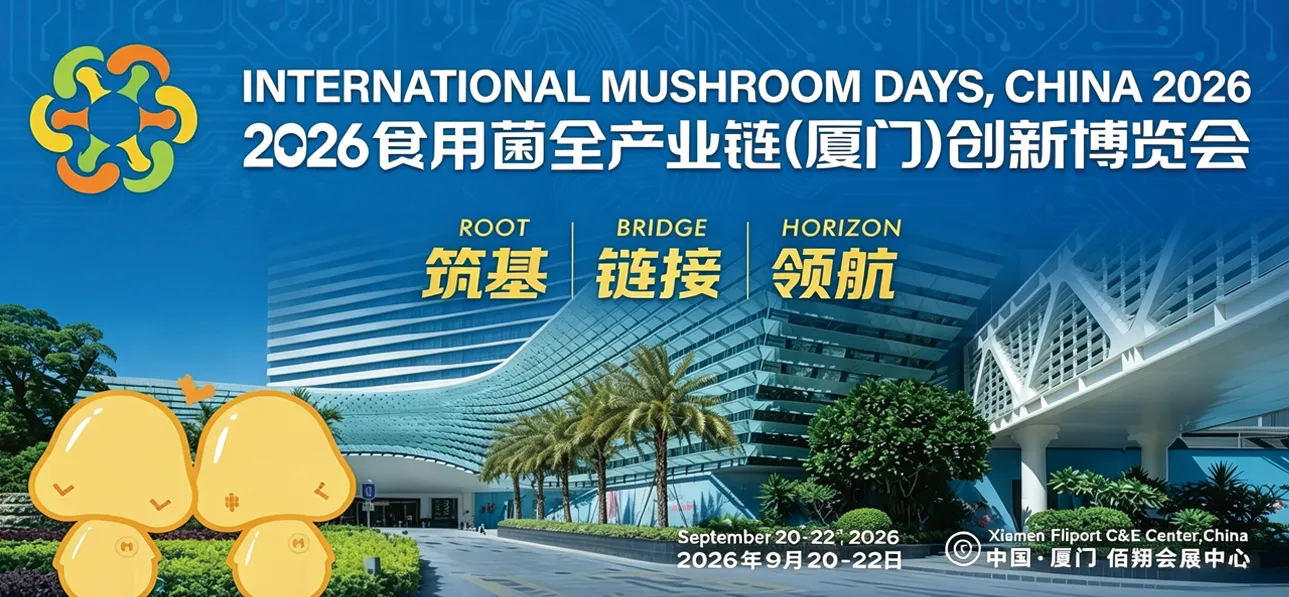
| Event Title |
2026 Mushroom Industry Chain Innovation Expo, Xiamen |
| Dates |
20–22 September 2026 |
| Venue |
Xiamen Baixiang Convention Center |
| Theme |
Build the Foundation · Connect the Industry · Lead the Future |
| Document Status |
Practical exhibitor guide; final arrangements are subject to the latest organizer notice |
Innovation must begin with action today. Better results are earned through disciplined preparation, real conversations and persistent follow-up.
How to Use This Playbook: An Operational Guide, Not a Brochure
HOW TO USE THIS PLAYBOOK
This playbook focuses on five practical questions: what to prepare, how to bring the right customers to the booth, how to hold relevant conversations, how to capture qualified leads, and how to convert those leads into orders and long-term cooperation after the event.
Each exhibitor should adapt the playbook to its products, team, budget and customer base. The company leader should hold a two-hour preparation meeting with sales, technical, marketing and after-sales teams to confirm targets, roles, messages, materials and follow-up deadlines.
ONE-LINE POSITION
A successful exhibition is not measured by how crowded the booth looks. It is measured by how many relevant people you meet, how many real needs you uncover, and how many specific next steps you secure.
Part 1: Define Business Outcomes First: Exhibiting Is Neither Tourism Nor Vending
PART 1 · DEFINE THE BUSINESS OUTCOME FIRST
An exhibitor invests in booth space, travel, samples and staff time. If the only outputs are business cards and photos, the exhibition has not delivered real value. The right approach is to define outcomes before departure, execute against them on site, and review the results afterwards.
1.1 Recommended Baseline Targets per Standard Booth
| Target |
Recommended Baseline |
How to Count |
| Targeted invitations before the event |
At least 50 target accounts |
Named contact, company, need and internal owner recorded |
| Confirmed appointments |
8–12 meetings |
Time, place, participants and topic confirmed |
| Qualified leads |
At least 30 |
A need, contact and next step are recorded; adding a contact alone does not count |
| A-level leads |
5–8 |
Clear need, identifiable decision process and near-term timing |
| High-value next actions |
3–5 |
Sample, test, quotation, proposal, factory visit or video meeting |
| Post-event response |
A leads within 24 hours; B leads within 48 hours |
Every promised item must be delivered on time |
These figures are operating baselines, not promises by the organizer. Each exhibitor may adjust them for booth size, team capacity, average deal value and sales cycle, but every exhibitor must work against clear targets.
Part 2: Segment Customers Before Choosing the Approach: Never Deliver the Same Pitch to Everyone
PART 2 · SEGMENT CUSTOMERS BEFORE CHOOSING THE APPROACH
People entering the same booth have different roles, objectives and concerns. Owners care about return, technical teams about reliability, procurement about price, delivery and risk, distributors about margin and support, and international buyers about standards, certification, payment and execution. Repeating the same company presentation to everyone is one of the most common and least effective exhibition habits.
| Customer type |
What they really care about |
Your strategy |
Required next step |
| Owner / decision-maker |
Return, risk, payback and long-term value |
Lead with the business problem and outcome, then the product |
Book a deeper meeting with technical and financial stakeholders |
| Production / technical lead |
Reliability, efficiency, yield, energy use, downtime and service |
Use data, cases, demonstrations and service evidence |
Agree on test conditions or an on-site diagnostic |
| Procurement lead |
Specification, price, lead time, quality and accountability |
Clarify total cost and delivery risk |
Obtain specifications, quantity and timing |
| Distributor / agent |
Market size, margin, territory, training and service support |
Qualify channel capability before discussing terms |
Exchange a territory plan and target-account list |
| Food processor / foodservice / retail buyer |
Consumer appeal, ease of use and supply reliability |
Sell usage occasions, application solutions and sell-through |
Arrange tasting, prototyping or a small-batch trial |
| Government / park / association |
Industry base, project substance, impact and implementation conditions |
Avoid broad claims; first clarify assets and bottlenecks |
Produce a one-page issue list and engagement plan |
| Research / technical institution |
Technical problem, samples, data, validation and commercialization |
Turn the research question into a joint validation task |
Define samples, metrics, owners and timeline |
| International buyer / overseas partner |
Compliance, certification, MOQ, lead time, payment, exclusivity and service |
Use concise business English and qualify market and channel first |
Exchange a requirement sheet and book a post-event video call |
Part 3: Different Exhibitors Need Different Proof
PART 3 · DIFFERENT EXHIBITORS NEED DIFFERENT PROOF
Exhibition materials should be built around the customer's buying logic, not the exhibitor's internal organization. Customers are not there to hear how good the company is; they are deciding whether the company can solve a specific problem.
| Exhibitor category |
Lead problem |
Evidence to bring |
Most important on-site action |
| Spawn, breeding and biotechnology |
Yield stability, resistance, cycle, fit and degeneration risk |
Variety data, applications, comparative trials, customer validation and technical-service process |
Understand the customer's process and environment before recommending |
| Inputs, additives and cultivation supplies |
Supply stability, consistency, cost and contamination risk |
Specifications, batch consistency, test reports, dosage and cost comparison |
Obtain current formula, annual volume and pain points |
| Equipment, automation and system integration |
Efficiency, labor, yield, energy, downtime and payback |
Operating video, real parameters, failure rate, delivery cases, service response and payback model |
Diagnose one production line instead of presenting every machine |
| Climate control, cooling, humidification and energy saving |
Climate stability, energy use, uniformity, maintenance and extreme conditions |
Trend data, coverage, energy comparison, maintenance checklist and cases |
Clarify room, species, season, current system and failures |
| Fresh, dried, processed and functional products |
Buyer, occasion, taste, price point, repeat purchase and supply |
Samples, tasting, specifications, shelf life, capacity, channel cases and compliance documents |
Explain applications in the language of foodservice, retail and food-industry buyers |
| Packaging, logistics and supply-chain services |
Loss, shelf life, efficiency, cost, traceability and cross-border delivery |
Before/after data, cost breakdown, delivery network and exception handling |
Use the customer's product, route and loss data to calculate value on site |
| Government, parks and associations |
Investment, branding, supply chain, market access, technology and enterprise services |
Industry baseline, enterprise list, assets, real projects, policy boundaries and contacts |
One place, one issue; one enterprise, one need—start with a problem list |
| Research, testing, consulting, design and digital services |
How expertise solves industry problems and reaches the market |
Method, examples, deliverables, timeline, fee boundaries and client outcomes |
Productize the service: client, problem, deliverable, time and price |
Part 4: The Four-Week Pre-Event Sprint
PART 4 · THE FOUR-WEEK PRE-EVENT SPRINT
Most exhibition results are determined before the doors open. Printing brochures at the last minute, deciding whom to meet on site, and improvising the message in front of customers rarely produce strong outcomes.
| Timing |
Must complete |
Owner |
Acceptance check |
| T-28 to T-21 |
Confirm targets, customer segments, lead solution, team and budget; build target-account list |
Company leader |
One-page battle plan plus 50+ target accounts |
| T-20 to T-14 |
Complete bilingual materials, cases, samples, demos, QR code and invitation scripts; begin direct outreach |
Marketing + sales + technical |
Materials ready; first outreach wave completed |
| T-13 to T-8 |
Publish customer-value content; confirm priority meetings; collect questions and prepare answers |
Sales lead |
8–12 meetings scheduled |
| T-7 to T-3 |
Rehearse the 30-second pitch, five-step conversation and objection handling; check logistics, passes, equipment and backups |
Booth lead |
Rehearsal passed; gaps closed |
| T-2 to T-1 |
Reconfirm priority meetings; inspect the booth against the 3/10/30-second standard; open the daily operations channel |
Entire team |
Schedule, booth, materials and systems fully operational |
Part 5: Materials That Help Customers Decide
PART 5 · MATERIALS THAT HELP CUSTOMERS DECIDE
5.1 Use the 1 + 3 + 5 + 1 Material Model
1. One lead message: state whom you help and which problem you solve.
2. Three solution cards: one for each major customer problem, covering the issue, solution, proof and next step.
3. Five proof points: real customers, cases, data, deliveries and after-sales service.
4. One primary call to action: scan, book, sample, test, quote or factory visit—choose the most important one.
5.2 Essential Checklist
☐ A one-page bilingual company and solution overview—not merely company history.
☐ Three customer solution cards, no more than one page each.
☐ Case cards showing the client problem, action, result, timing and whether the case can be verified.
☐ Specifications, certifications, test reports, usage conditions, lead time and service terms.
☐ Samples, tasting products, key components or a working demo; if live operation is impossible, prepare a high-quality video.
☐ QR codes for catalogues, videos, cases and contacts; test every destination before the event.
☐ Internal pricing guardrails: list price, negotiation range, payment, lead time and approval owner; do not improvise commitments.
☐ Lead cards and a daily master sheet in both paper and digital form.
☐ Business cards, badges, chargers, power strips, tape, scissors, pens, folders, backup phone and power banks.
☐ For international buyers: English materials, WhatsApp/email, export qualifications, certifications, MOQ, payment and trade terms.
Part 6: Booth Design: 3 Seconds, 10 Seconds, 30 Seconds
PART 6 · BOOTH DESIGN
| Time |
What the visitor must understand |
How the booth should communicate |
| 3 seconds |
What you do and whom you serve |
Use one large front-facing message; do not fill the wall with product names |
| 10 seconds |
Which specific problem you solve |
Show three customer pains or outcomes; avoid empty words such as leading, professional or innovative |
| 30 seconds |
Why to trust you and what to do next |
Provide cases, data, samples, demos and one clear call to action |
BOOTH RED LINE
Do not turn the booth into a warehouse, an awards wall or a wall of executive photographs. You may have many products, but only one lead message. Materials may be comprehensive, but the on-site message must be sharply prioritized.
Part 7: Team Roles and Daily Operating Rhythm
PART 7 · TEAM ROLES AND DAILY OPERATING RHYTHM
| Role |
Primary responsibility |
Common failure to avoid |
| Booth lead |
Targets, roster, priority accounts, decisions, daily report and review |
Spending all day in conversations while nobody runs the operation |
| First contact |
Identify the visitor, ask the first question and route correctly |
Handing out brochures and reciting the company introduction immediately |
| Sales lead |
Qualify need, decision process, budget, timing and next step |
Having a pleasant conversation without securing action |
| Technical / product expert |
Diagnose, show evidence and define conditions and risks |
Talking only about specifications, not customer outcomes |
| Lead manager |
Record, grade, complete and assign every lead |
Collecting cards without context |
| Content and operations support |
Content, posting, replenishment, meeting reminders and logistics |
Capturing crowds but not customer problems or solutions |
Small teams may combine roles, but ownership for first contact, deep conversation, recording and follow-up must be explicit before the event.
7.1 Daily Rhythm
1. Fifteen minutes before opening: confirm priority accounts, appointments, roles and the day's lead message.
2. Ten minutes at midday: review A leads, missing information and afternoon meetings; correct issues immediately.
3. Thirty minutes after closing: consolidate leads, grades, owners, next steps and delivery deadlines.
Record commitments the same day. Send any material that can be delivered immediately rather than waiting until the team returns home.
Part 8: Pre-Event Promotion: Build Awareness and Book Real Meetings
PART 8 · PRE-EVENT PROMOTION
Public posts on WeChat, video channels, LinkedIn or Facebook can create awareness, but direct outreach is what secures meetings. The correct sequence is: build the target list, contact people one by one, and use public content to reinforce trust.
8.1 Pre-event content cadence
8.1 Pre-event content cadence
| Timing |
Content theme |
Must answer |
T-21
T-21 |
Why we are exhibiting
Why we are exhibiting |
What has changed and which problem we are prepared to solve
What has changed and which problem we are prepared to solve |
T-14
T-14 |
Lead solution
Lead solution |
Who should meet us and what value they can expect
Who should meet us and what value they can expect |
T-7
T-7 |
Real case
Real case |
The original problem, what we did and the result
The original problem, what we did and the result |
T-3
T-3 |
On-site plan
On-site plan |
Booth, time, contact and booking method
Booth, time, contact and booking method |
T-1
T-1 |
Final reminder
Final reminder |
Which meeting slots remain and which questions visitors should bring
Which meeting slots remain and which questions visitors should bring |
8.2 Direct invitation script
8.2 Direct invitation script
DIRECT INVITATION TEMPLATE
Hello Mr./Ms. Wang. We will exhibit at INTERNATIONAL MUSHROOM DAYS, CHINA 2026, held at Xiamen Baixiang Convention Center from 20 to 22 September. Rather than simply displaying products, we have prepared a focused solution, sample and case for [customer problem]. I understand that your company is currently looking at [known need]. May I book a 20-minute discussion with you at [date and time] to review the issue and possible next steps? We will be at Booth [number], and I will be there in person.
Do not send a generic invitation asking people to visit the booth. State why the meeting is worthwhile, what will be discussed, how long it will take and who will be present.
Part 9: The Five-Step On-Site Conversation
PART 9 · THE FIVE-STEP ON-SITE CONVERSATION
When a visitor enters the booth, the first priority is not the product presentation. It is to understand who the person is, why they came, what problem they face, whether the need is real, who decides and when action may occur.
- Step 1 — Identify the role: Are you responsible for production, procurement, technology, distribution or local industry development?
- Step 2 — Discover the problem: What is the one issue you most want to solve? How are you handling it today?
- Step 3 — Size the value: What does this issue cost each year in money, loss, downtime or missed opportunity?
- Step 4 — Match the solution: Discuss only the relevant solution, proof, operating conditions and risks.
- Step 5 — Secure the next step: Before the visitor leaves, agree who will do what and by when.
9.1 The 30-second introduction
9.1 The 30-second introduction
STRUCTURE
We mainly serve [customer type] and focus on solving [three problems]. What differentiates us is not [generic claim], but [real capability], already validated in [real customer or setting]. If you are facing [relevant issue], we can spend ten minutes clarifying the situation first.
9.2 Six questions that must be answered on site
9.2 Six questions that must be answered on site
- What stage is your business, product or project currently in?
- Which issue is affecting results most, and for how long?
- What product, equipment, supplier or solution do you use today, and where does it fall short?
- If solved, which metric matters most: cost, efficiency, quality, sales, lead time or risk?
- Who is involved in the decision, and when are budget, testing and purchase expected?
- What is the best next step: materials, sample, test, quotation, video call or site visit?
Part 10: Different Strategies for Eight Customer Types
PART 10 · EIGHT CUSTOMER TYPES
10.1 Owners and senior decision-makers
Senior decision-makers do not have time for a full product presentation. Start with the operating issue they most want to solve, then cover loss, solution, investment, return, risk and next step in six clear points.
- Key materials: one-page business case, payback estimate, verified case and clear accountability.
- Close: book the next meeting with technical, procurement and finance stakeholders.
10.2 Production and technical leads
Start with process, species, capacity, environment, current equipment and failures. Do not answer outside the operating context. Be clear about what can be done, what cannot, and what requires validation.
- Key materials: parameters, trend curves, operating video, comparative data, maintenance and service process.
- Close: agree on the data required, test conditions or factory diagnostic date.
10.3 Procurement leads
Procurement is not only about the lowest price; it is about avoiding delivery failure. Clarify specification, quantity, lead time, warranty, acceptance, service, payment and total cost of use.
- Key materials: specification sheet, delivery process, pricing guardrails, quality and exception handling.
- Close: obtain the parameters and timeline required for a formal quotation.
10.4 Distributors and agents
Do not promise exclusivity at the first meeting. First understand customer coverage, team size, track record, service capability and willingness to invest.
- Key materials: channel framework, margin logic, training, lead support and service support.
- Close: request a 90-day territory development plan.
10.5 Food processing, foodservice, retail and brand customers
Do not stop at species, origin and nutrition. Explain the product application, usage occasion, processing method, cost, consumer reason to buy and supply reliability in the customer's own commercial language.
- Key materials: tasting, recipe/application, specification, price point, shelf life and supply plan.
- Close: arrange prototyping, a small-batch trial or joint development.
10.6 Government, parks and associations
First understand local assets, gaps and bottlenecks before presenting a broad plan. Apply one place, one issue; one enterprise, one need—and begin with facts and problems.
- Key materials: industry base, enterprise list, project conditions, service pathway and compliance boundaries.
- Close: agree on a focused closed-door review or local field visit.
10.7 Research and technical institutions
Do not stop at a general intention to cooperate. Convert cooperation into a testable task: object, problem, samples, data, acceptance criteria, intellectual-property ownership and commercialization path.
- Key materials: research foundation, method, validation conditions, IP and commercialization mechanism.
- Close: draft a one-page joint validation brief.
10.8 International buyers and overseas partners
First qualify the country, customer base, channel, product category and import experience. Do not treat translation, Chinese-speaking networks, exhibitions or agents as proof of a market.
- Key materials: English specifications, compliance, certifications, MOQ, Incoterms, payment, lead time, packaging and service.
- Close: exchange requirement sheets and schedule a 30-minute post-event video call.
Part 11: Objection Handling: Diagnose Before Responding
PART 11 · OBJECTION HANDLING
| Customer says |
Recommended response |
Next step |
“Your price is too high.”
Price objection |
Ask what the comparison is and whether it is purchase price or total cost; then discuss lifecycle, loss, downtime, labor and service.
Total cost discussion |
Build a total-cost comparison using the customer's data.
Build comparison |
“We already have a supplier.”
Existing supplier |
Do not criticize the incumbent. Ask what works and what does not, then look for a complementary, backup or pilot opportunity.
Explore gaps |
Propose a limited, low-risk comparative trial.
Propose trial |
“We will review it later.”
Delay objection |
Clarify what must be reviewed, who will participate and when a decision is expected.
Clarify timeline |
Agree on materials and the next contact date before parting.
Agree next date |
“Send your lowest price first.”
Lowest price |
Explain that a lowest price is meaningless without specifications, quantity, timing and service scope.
Explain parameters |
Issue a formal quotation after obtaining complete requirements.
Issue quotation |
“Can you guarantee the result?”
Result guarantee |
Do not overpromise. Explain validated conditions, unknowns, shared responsibilities and acceptance method.
Set expectations |
Start with a test or phased delivery.
Phased delivery |
“We want exclusivity.”
Exclusivity request |
Validate channel capability, investment, targets, service and payment before territory and term.
Validate capability |
Request a 90-day plan and initial validation target.
Request 90-day plan |
Part 12: On-Site Promotion: Publish Proof, Not Just Crowd Shots
PART 12 · ON-SITE PROMOTION
On-site content should help people who are not present understand what customers care about, what the exhibitor solves and why a follow-up is worthwhile. Executive photos, booth shots and crowds may be included, but they should not be the whole story.
12.1 Three daily content windows
12.1 Three daily content windows
- Morning: the problem we are focusing on today and the customer types we invite to meet.
- Afternoon: one real customer problem, demonstration or solution insight; obtain customer consent before publishing.
- After closing: three needs discovered, one key insight and the remaining meeting slots for tomorrow.
12.2 On-site content standards
12.2 On-site content standards
- Cover one problem per post; do not overload it.
- Use real data instead of adjectives and customer situations instead of slogans.
- Every post must include booth number, timing, contact and a clear action.
- Use concise English for international audiences and avoid long literal translations or unsupported claims such as first, only or leading.
- Do not publish customer names, projects, quotations, contracts or confidential technical information without permission.
Part 13: Lead Management: A Contact Is Not Yet a Lead
PART 13 · LEAD MANAGEMENT
A qualified lead must contain at least seven elements: identity, business, problem, current solution, decision process, timing and next step. Without these, the record is a contact—not a sales opportunity.
| Grade |
Qualification standard |
Response time |
Required action |
A | Priority
Priority grade |
Clear need; identifiable decision process; possible test or purchase within 3 months; next step agreed
High intent |
24 hours
Fast response |
Assign owner; send tailored material; confirm meeting, test or quote
Active engagement |
B | Nurture
Nurture grade |
Real problem, but budget, timing or decision process unclear
Medium intent |
48 hours
Standard response |
Fill gaps; share relevant case; contact again within 7 days
Nurture process |
C | General
General grade |
No clear current need; relevant relationship or future potential
Low intent |
Within 7 days
Delayed response |
Enter nurture stream; contact monthly or by relevant event
Periodic check |
D | Disqualified
Disqualified |
Invalid identity, irrelevant need, material-only request or no viable follow-up
No fit |
No sales follow-up
None |
Retain compliance record without consuming sales capacity
Archive record |
13.1 Mandatory lead-card fields
13.1 Mandatory lead-card fields
- Name, title, company, phone, WeChat/email/WhatsApp, country or region.
- Customer type, core business, scale or project stage.
- Core problem, current solution, dissatisfaction and target metric.
- Budget, timing, decision-maker, influencers and procurement/cooperation process.
- Product/solution interest, materials reviewed and objections raised.
- Agreed next step, owner, deadline and lead grade.
Part 14: Post-Event Promotion and Follow-Up
PART 14 · POST-EVENT PROMOTION AND FOLLOW-UP
The end of the exhibition is not the end of the work; it is the beginning of conversion. Buyers meet many suppliers. The exhibitor that clarifies the problem, keeps promises and secures the next step is the one most likely to remain relevant.
| Timing |
Sales Action |
Promotion Action |
Acceptance |
0–24 hours
0–24 hours |
Clean, deduplicate, grade and assign; contact all A leads
Clean, deduplicate, grade and assign; contact all A leads |
Publish thanks and three real observations without customer-sensitive information
Publish thanks and three real observations without customer-sensitive information |
100% of A leads have acknowledgement and next step
100% of A leads have acknowledgement and next step |
24–48 hours
24–48 hours |
Contact B leads; deliver promised materials, meeting note and need confirmation
Contact B leads; deliver promised materials, meeting note and need confirmation |
Publish one solution or case insight
Publish one solution or case insight |
All promised materials sent on time
All promised materials sent on time |
3–7 days
3–7 days |
Quote, sample, test, video call, factory visit or solution workshop
Quote, sample, test, video call, factory visit or solution workshop |
Publish a substantive review answering the most common customer question
Publish a substantive review answering the most common customer question |
Every A/B lead has status and date
Every A/B lead has status and date |
7–30 days
7–30 days |
Advance testing and internal decision; resolve objections; update value and probability
Advance testing and internal decision; resolve objections; update value and probability |
Provide segment-relevant content rather than generic blasts
Provide segment-relevant content rather than generic blasts |
Build a real sales pipeline
Build a real sales pipeline |
30/60/90 days
30/60/90 days |
Review conversion, orders, payment, losses and next validation
Review conversion, orders, payment, losses and next validation |
Publish only verifiable results; never stage false signings
Publish only verifiable results; never stage false signings |
Complete AAR and improve the next event
Complete AAR and improve the next event |
Part 15: Follow-Up Scripts
PART 15 · FOLLOW-UP SCRIPTS
15.1 Follow-up within 24 hours
15.1 Follow-up within 24 hours
FOLLOW-UP TEMPLATE
Hello Mr./Ms. Wang. Thank you for visiting our booth today. My understanding is that your priority is [problem], with the objective of improving [metric], and that you plan to move forward around [timing]. We agreed that we will provide [material/sample/proposal] by [date], while your team will share [data/specification/contact]. Please correct me if any point is inaccurate. I suggest a 30-minute video call on [date] to confirm the test or quotation requirements.
15.2 If the customer does not respond
15.2 If the customer does not respond
Do not repeatedly ask whether the customer has decided. The second follow-up must add value through a relevant case, cost comparison, technical insight or lower-risk trial. After three unanswered attempts, move the contact into nurture rather than continuing ineffective outreach.
Part 16: KPI Scorecard: Manage by Results, Not Impressions
PART 16 · KPI SCORECARD
| Stage |
Key Metrics |
How to Measure |
Before
Before |
Target accounts, valid reach, response, appointments and priority-account coverage
Target accounts, valid reach, response, appointments and priority-account coverage |
Track by account; do not count bulk-message volume
Track by account; do not count bulk-message volume |
During
During |
Visitors, qualified leads, A/B leads, deep conversations and next-step rate
Visitors, qualified leads, A/B leads, deep conversations and next-step rate |
Qualified leads must meet the seven-field standard
Qualified leads must meet the seven-field standard |
Within 7 days
Within 7 days |
24/48-hour response, promise fulfillment, meetings, tests and quotations
24/48-hour response, promise fulfillment, meetings, tests and quotations |
Count completed actions, not planned actions
Count completed actions, not planned actions |
30/60/90 days
30/60/90 days |
Conversions, order value, margin, payment, sales cycle and loss reasons
Conversions, order value, margin, payment, sales cycle and loss reasons |
Separate intention, contract, delivery and payment
Separate intention, contract, delivery and payment |
Organizational learning
Organizational learning |
Effective messages, ineffective materials, new needs, product gaps and service risks
Effective messages, ineffective materials, new needs, product gaps and service risks |
Complete AAR within 72 hours and assign improvement owners
Complete AAR within 72 hours and assign improvement owners |
Four Conversion Rates That Matter
Four conversion rates that matter
Appointment attendance = attended appointments / confirmed appointments; qualified-lead rate = qualified leads / meaningful contacts; next-step rate = leads with agreed action / qualified leads; 90-day conversion = contracted customers / A and B leads.
Part 17: Non-Negotiable Red Lines
PART 17 · NON-NEGOTIABLE RED LINES
- Do not exaggerate technology, capacity, customers, cases, certifications or sales data.
- Do not present an intention as a contract, a contract as delivery, or delivery as payment.
- No staged signings, fabricated transactions or disclosure of customer, pricing, technical or project information.
- Do not casually promise lowest price, exclusivity, delivery, results or government cooperation.
- Do not publish customer names, photos, conversations or cooperation information without consent.
- Operate lawfully, transparently, voluntarily and efficiently. The organizer does not guarantee project implementation, transactions or investment returns.
- Use customer data only for agreed business contact; protect it and avoid unauthorized groups or irrelevant mass messaging.
- If the product is unsuitable, evidence is insufficient or risk cannot be controlled, say no rather than creating future failure for the sake of a sale.
Appendix A: Ready-to-Use Promotion and Communication Templates
APPENDIX A · TEMPLATES
A1 Pre-event WeChat / public-channel post
A1 Pre-event post
SOCIAL POST TEMPLATE
The market has changed, customers have changed, and the way we exhibit must change. From 20 to 22 September, we will exhibit at INTERNATIONAL MUSHROOM DAYS, CHINA 2026 at Xiamen Baixiang Convention Center. We are not coming simply to display products or hand out brochures. We are bringing solutions, samples and real cases for [three customer problems]. If you are working on [target issue], please contact [name / phone / email / WhatsApp] to book a 20-minute discussion. Booth: [number]. Every meeting should be prepared, relevant and action-oriented.
A2 International buyer meeting email
A2 International buyer meeting email
READY-TO-USE ENGLISH
Subject: Meeting in Xiamen | [Company] solution for [customer problem]
Dear [Name], We will exhibit at INTERNATIONAL MUSHROOM DAYS, CHINA 2026 at Xiamen Baixiang Convention Center from 20 to 22 September. As your company is active in [market/business], we have prepared English specifications, samples and relevant cases for [need]. We would value a 20-minute meeting to understand your market, specifications, certification, volume and timing, and to determine whether there is a practical basis for further cooperation. Available slots: [Option 1 / Option 2]. Booth: [number]. Kind regards, [Name / title / mobile / email / WhatsApp].
A3 Appointment confirmation
A3 Appointment confirmation
Your meeting is confirmed for [date/time] at [booth/meeting area]. We have reserved 20 minutes to discuss [issue], with our [sales/technical] colleagues attending. If possible, please bring [specification/data/sample]. If your schedule changes, contact [mobile] directly.
A4 Short post-event thank-you message
A4 Short post-event thank-you message
Thank you for meeting us in Xiamen. The core issue you raised was [problem]. [Owner] will provide [material/sample/proposal] by [date]. We suggest [video call/test/quotation/visit] on [date] to confirm the operating conditions and next step.
Appendix B: On-Site Lead Card
APPENDIX B · ON-SITE LEAD CARD
| Basic information |
Name: Title: Company:
Phone / WeChat / Email / WhatsApp:
Country / region: |
| Customer type |
□ Owner/decision-maker □ Production/technical □ Procurement
□ Channel □ Food buyer □ Government/park □ Research
□ International □ Other |
| Core problem |
Current situation:
Main dissatisfaction:
Target metric: |
| Decision conditions |
Budget: Timing: Decision-maker:
Current supplier/solution: |
| On-site assessment |
Interested product/solution:
Main objection:
Lead grade: □A □B □C □D |
| Next step |
□ Materials □ Sample □ Test □ Quote □ Video call □ Factory visit □ Other
Owner: Deadline: |
Appendix C: 30-Minute Daily Closeout
APPENDIX C · DAILY CLOSEOUT
- How many qualified leads were confirmed today, by A/B/C/D grade?
- What were the three most important customer problems, and should tomorrow's lead message change?
- Which messages worked, and which were unclear or unconvincing?
- What was promised, who owns it and what is the deadline?
- Which priority meetings are scheduled tomorrow, who should attend and what must be prepared?
- What gaps exist in materials, samples, staffing, equipment or booth operations, and what must be fixed tonight?
Final Page: Seven Actions to Start Today
FINAL PAGE · SEVEN ACTIONS
- The company leader confirms one overall objective and three outcome metrics.
- Build one target list covering current customers, prospects, former customers and partners.
- Rank A/B/C and contact the 50 people most worth meeting first.
- Write one lead message, three solution cards and five proof points.
- Assign booth roles, the lead manager and post-event follow-up owners.
- Rehearse the 30-second introduction, six questions and objection handling.
- Set the 24-hour, 48-hour, 7-day and 30/60/90-day follow-up mechanism.
Closing
CLOSING
Innovation is not a new slogan. It means changing how we prepare, communicate and follow up—starting today. The market does not reward effort alone; it rewards companies that solve real customer problems. Better outcomes are earned through disciplined work, one action at a time.
Event Information and Contacts
EVENT INFORMATION
Dates: 20–22 September 2026; Venue: Xiamen Baixiang Convention Center. Exhibition contact: Chen Tianzhang, +86 139 5009 7547. Exhibition team contact: Chen Mengyang, +86 136 0139 6307. Overall coordination: Liu Ziqiang, +86 133 1157 3135. Final arrangements are subject to the latest organizer notice.
创新博览会LOGO.png)
.webp)
.webp)


创新博览会LOGO-white.png)