February 12, 2026
From “Transactional Contracts” to “Strategic Alignment”: How 15 Years of Manufacturing Excellence Empowers Global Mushroom Brands
[BEIJING, February 12, 2026] — In the field of cross-border B2B trade, the relationship between brand owners and original equipment manufacturers (OEMs) is undergoing a profound transformation from simple "buyer-seller contracts" toward deep "strategic alignment." As global market access standards become increasingly stringent and supply chain risks grow more complex, brand owners are urgently seeking partners with long-term values, deep industrial heritage, and a global vision.
As a professional edible mushroom manufacturer with over 15 years of industry experience, we have consistently positioned ourselves as enablers of our partners' global expansion. This article provides an in-depth analysis of how building core competencies, implementing collaborative R&D, and executing global compliance layouts can assist partners in achieving steady market share growth in a volatile international market.
I. Building Core Competencies: 15 Years of Manufacturing as the Bedrock of Global OEM
Supply Chain Stability and Risk Resilience
In B2B trade practice, a supplier’s core competitiveness is first reflected in its supply chain resilience under extreme conditions. Manufacturers with over a decade of experience have established closed-loop systems covering everything from strain breeding and raw material reserves to large-scale processing. Unlike short-term workshops focused solely on low prices, professional manufacturers prioritize strategic inventory to hedge against fluctuations in agricultural prices. This high level of stability is the primary source of security for brand owners and the "anchor" for maintaining global channel credit.
Industrial Standardization and Quality Consistency
Another dimension of competitiveness is the pursuit of "industrial consistency." As natural products, mushrooms exhibit significant biological variance; transforming non-standard agricultural goods into standardized industrial products is the litmus test for an OEM. Leveraging 10+ years of data, we implement rigorous real-time monitoring of core parameters such as sterilization temperature, vacuum levels, and solid content. This ensures that sensory and nutritional indicators remain consistent across all quarters, providing the industrial foundation for a brand’s long-term growth.
II. Collaborative R&D: The Engine Driving Product Differentiation
Deep Integration from Technical Syncing to Product Co-creation
In the modern OEM field, the factory is no longer just an executor but a technical consultant. The collaborative R&D model aims to break down information silos. By intervening in the product definition stage, manufacturers can utilize laboratory biotech data to help brands optimize mushroom formulas. For example, enhancing functional activity through specific strain combinations without chemical additives allows brands to capture niche blue ocean markets through technical premiums.
Global Compliance-Oriented Customized Development
A practical value of collaborative R&D lies in solving global compliance hurdles. Different countries have vastly different regulations regarding food ingredients and labeling. An expert R&D team provides customized advice for markets like North America, the EU, and Japan/Korea. From Non-GMO certification to "zero-additive" labeling, pre-verified R&D ensures products meet local regulations before reaching the port, significantly shortening the global launch cycle and reducing trade losses.
III. Globalization and Market Share: Business Practices in Resource Integration
Channel Empowerment and Economies of Scale
The pursuit of market share is essentially a competition of supply chain efficiency. Through a manufacturer’s wholesale system, brands gain dividends from economies of scale. Beyond processing, we assist in optimizing cross-border logistics costs through pallet design and unit load management. When the landed cost of each unit is controlled, brand owners can adopt more aggressive pricing strategies, translating production-side optimization into retail-side expansion.
Brand Moats: Private Labels and Long-term Trust Assets
Private label manufacturing is the core method for brands to build proprietary assets. We help partners translate advanced factory processes into unique brand stories. This clear division of labor allows brand owners to achieve rapid expansion under an asset-light model. Over the past 15 years, we have witnessed partners grow from regional players into multinational giants. This deep commercial trust has become a valuable asset for resisting global economic fluctuations.
IV. Conclusion: Opening the Next 15 Years through Strategic Collaboration
The future of mushroom OEM lies in the deep strategic binding between global brands and professional manufacturers. In an era of digitalization and green globalization, no single entity can face all challenges alone.
By injecting the core competencies of Chinese manufacturers into the global supply chain and driving innovation through collaborative R&D, we are building a win-win global mushroom ecosystem. We will continue to uphold the spirit of professional manufacturing to create sustainable commercial value with our partners worldwide for the next 15 years.
About Us
The China Chamber of Commerce of I/E of Foodstuffs, Native Produce and Animal By-products (CFNA) is the largest agricultural trade organization in China, operating under the Ministry of Commerce. It provides coordination, service, and advocacy for over 6,000 member enterprises.
The Edible Mushroom and Mushroom Products Branch of CFNA, established in 2002, is responsible for the coordination and promotion of China’s mushroom trade, representing over 100 leading backbone enterprises in the industry.
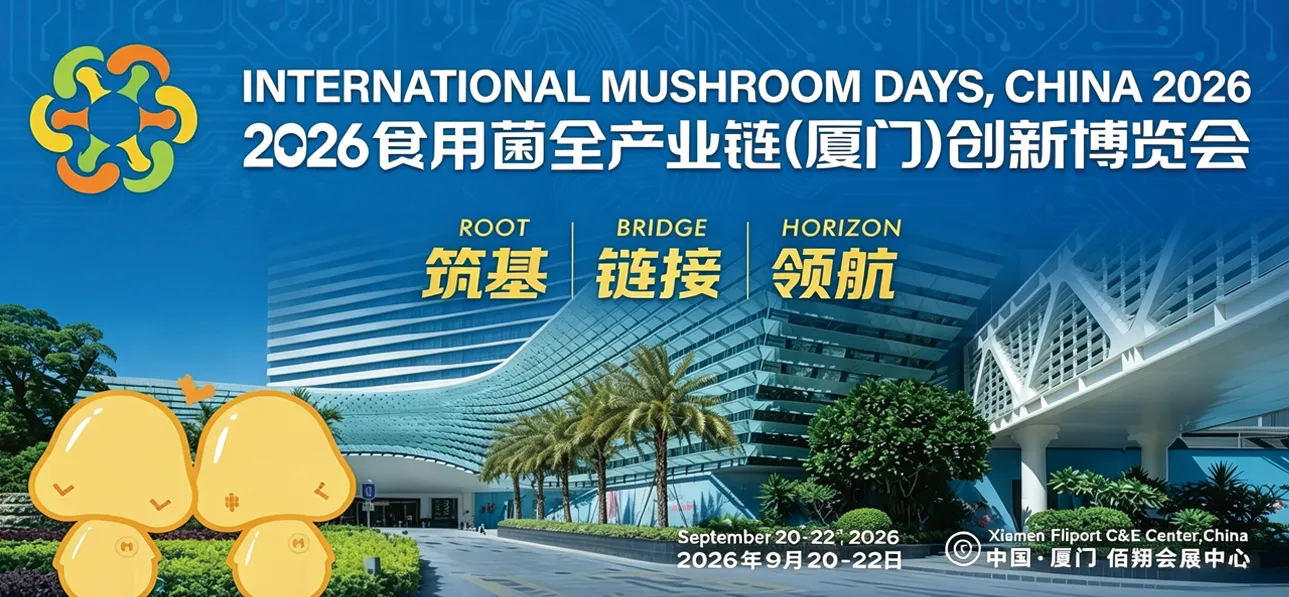
China Mushroom Days (Edible Mushroom Full Industry Chain Innovation Expo) is the most influential professional exhibition in the field, hosted by the CFNA Mushroom Branch. It serves as a high-level platform for technical exchange, brand display, and business matchmaking for industry elites worldwide.
Frequently Asked Questions
Q1: How does 15 years of experience translate into a brand's advantage?
A1: It means a lower learning curve and higher error tolerance. We foresee and avoid physical or microbial risks, ensuring the core competitiveness of the product remains high while saving the brand owner hidden correction costs.
Q2: Does Collaborative R&D mean sharing core trade secrets?
A2: Not at all. It is about technical cooperation. We use strict Non-Disclosure Agreements (NDAs) and IP isolation mechanisms to help brands turn ideas into industrial realities.
Q3: How do you help small and medium brands increase market share quickly?
A3: We offer flexible wholesale pricing and customized packaging, allowing smaller brands to access top-tier production standards with lower initial investment.
Q4: What defines a "long-term strategic partnership"?
A4: This includes priority supply rights for raw materials, guaranteed production slots during peak seasons, and joint response mechanisms during global supply chain crises.
Q5: How do you ensure compliance with global environmental and entry regulations?
A5: Our compliance department tracks global entry policies in real-time. By introducing compliance audits during the R&D phase, we ensure every batch meets the requirements of the destination port.
Q6: What is your advice for Private Label differentiation?
A6: We suggest brands leverage the latest processing breakthroughs—such as functional strains or innovative packaging—to establish unique positioning rather than competing solely on price.
Q7: How is the balance between scale and marginal cost achieved?
A7: Through tiered procurement contracts, we help customers reach the tipping point of scale effect by optimizing order volumes or establishing annual purchase plans.
Q8: Why is localized service important in global mushroom OEM
A8: While production is in China, consumption is global. We provide technical support and documents tailored to local habits and languages to improve the end-user experience.
创新博览会LOGO.png)

.webp)

创新博览会LOGO-white.png)